
Accountability is the backbone of effective coaching. It ensures clients stay focused, follow through on commitments, and achieve their goals. Research shows that having an accountability partner, like a coach, increases goal achievement rates to 95%, compared to just 10% for those without any accountability structure.
Here’s why accountability matters in coaching:
- Clear Commitments: Clients commit to specific actions, with deadlines and follow-ups, turning vague intentions into actionable steps.
- Trust and Connection: Regular check-ins build trust and create a strong coach-client bond.
- Improved Outcomes: Weekly accountability boosts progress by 40%, compared to less frequent check-ins.
- Growth Through Feedback: Missed goals lead to constructive conversations, focusing on learning rather than blame.
Without accountability, clients risk losing focus, momentum, and trust in the process. Coaches, in turn, find it harder to provide meaningful support. Regular check-ins, goal tracking, and community support can transform nutrition coaching into a results-driven partnership.
Bottom line: Accountability drives success and strengthens the coach-client relationship, making it a key element in achieving long-term goals.
How To Hold Coaching Clients Accountable (5 Biggest Mistakes)
sbb-itb-29cdcd8
Problems That Arise Without Accountability
When accountability is missing, clients often lose focus and stray from their goals. Coaching, which should be a structured and impactful process, becomes a lower priority. Small missteps can snowball, and clients who were once motivated and engaged may lose their momentum. This creates challenges for coaches, who find it harder to provide effective support. Over time, this lack of structure erodes trust and hinders meaningful progress.
Here’s a closer look at how these problems take shape.
How Irregular Check-Ins Hurt Progress
Inconsistent check-ins disrupt the Hawthorne Effect, which is the psychological boost clients get from knowing someone is paying attention to their efforts. Without this subtle motivator, clients are more likely to skip workouts, ignore nutrition plans, or stop tracking their progress altogether. For coaches, irregular communication means losing access to critical real-time data – things like stress levels, adherence, sleep quality, and biofeedback – that are essential for tailoring programs.
As HubFit puts it:
"The check-in is the bridge between the plan and the result. It is the pulse of your coaching business."
Irregular check-ins also send an unintended message: deadlines and consistency don’t matter. This relaxed approach can lead to a broader sense of complacency, causing clients to drift further from their goals.
But missed check-ins are only part of the problem. A lack of ongoing support can make things worse.
How Lack of Support Leads to Disengagement
Accountability isn’t just about tracking progress – it’s also about maintaining a strong connection between clients and their coaching journey. When accountability falters, clients often feel neglected, which can lead to disengagement. This phenomenon, sometimes referred to as "quiet quitting", happens not because clients no longer care about their goals, but because they feel overlooked.
The trust between coach and client can break down quickly. Delayed or absent feedback disrupts momentum, leaving clients feeling unsupported and unmotivated. A poorly managed or inconsistent check-in process can come across as unprofessional, shaking a client’s confidence in both the coach and the program. In these situations, clients may start avoiding responsibility altogether – denying mistakes, deflecting blame, or minimizing missed goals.
To prevent this, regular check-ins – weekly or bi-weekly – are often considered the best approach. These frequent touchpoints help catch early signs of declining adherence and keep clients on track. Stretching check-ins to monthly intervals, however, can allow small problems to grow into major setbacks.
How to Use Accountability to Strengthen Coaching Relationships
Building strong accountability takes intentional planning and consistent effort. When done right, it creates structure, trust, and engagement. Here’s how you can use accountability to enhance coaching relationships.
Weekly Check-Ins for Personalized Support
Weekly check-ins are the cornerstone of effective accountability. These sessions should focus on two main objectives: reviewing the client’s actions and reflecting on the lessons learned from those actions. For clients tackling particularly tough habits, more frequent check-ins – every 2–3 days via text or email – can help establish new behaviors. Letting clients define their own accountability methods can also make these habits stick.
Take N The Mix Nutrition as an example. Their system revolves around weekly check-ins that analyze real-time data like protein intake, training performance, and energy levels. They adjust plans based on individual needs, and with a multi-coach setup, clients always have access to timely feedback, even if one coach is unavailable.
These regular check-ins provide a solid framework for tracking progress and maintaining momentum.
Goal Tracking for Measurable Results
In addition to check-ins, self-monitoring is a game-changer for achieving goals. Studies show that people who track their efforts – whether through food logs, fitness apps, or habit trackers – are more likely to succeed. Instead of focusing solely on outcomes like weight loss, it’s often more effective to track repeatable actions, such as daily walks or prepping meals, as these are directly within the client’s control.
The key is to match the tracking tool to the challenge. For example, habit streak apps can help build consistency, while mood logs are ideal for managing emotion-driven behaviors. To ensure tracking doesn’t feel overwhelming, keep it simple – updates should take less than two minutes. As Safwan Azeem explains:
"The purpose of tracking is not surveillance. It is clarity, pattern recognition, and better support."
N The Mix Nutrition incorporates app-based tracking into its coaching model, making it easy for clients to log macros and workouts, and track progress. This data feeds directly into weekly check-ins, allowing coaches to spot trends, celebrate wins, and address challenges. Ultimately, this process helps clients feel accountable not just to their coach but to themselves.
Creating a Supportive Community
While individual accountability is crucial, a supportive community can amplify results. Sharing goals in a group setting fosters mutual motivation and creates a sense of shared responsibility that’s hard to replicate in one-on-one coaching. This social dynamic combats isolation and encourages clients to face challenges head-on.
Designating an accountability partner within a group can deepen commitment and reinforce the sense of shared progress. In a community, personal growth becomes a collective journey, and the group’s energy can keep individuals motivated even when their own drive falters.
Josh Chernoff, a coach and author, sums it up perfectly:
"Growth and a movement toward more fulfillment does not have to be a solo sport."
N The Mix Nutrition strengthens its coaching model by offering clients access to a vibrant community. This peer network allows members to share experiences, celebrate achievements, and learn from others facing similar challenges. Combined with personalized coaching, this community-driven approach creates a well-rounded system that reinforces accountability on every level.
The Impact of Accountability on Coaching Results
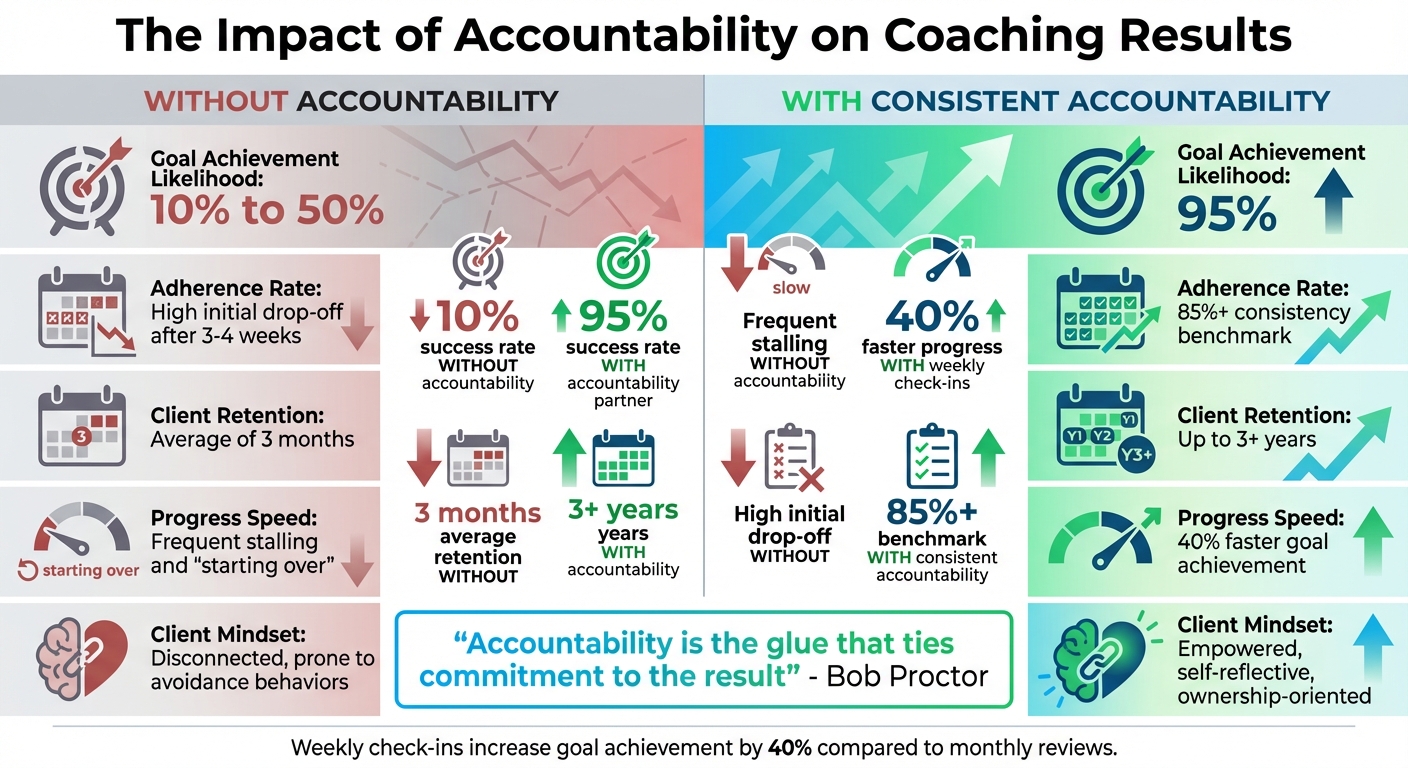
Impact of Accountability on Coaching Success Rates and Client Outcomes
Outcomes With vs. Without Accountability
The results are striking. When clients work with a coach or an accountability partner, their chances of following through skyrocket to 95%, compared to just 10% for those who only have an idea and 50% for those with a plan. That’s nearly a tenfold increase in success rates, simply by adding structured accountability.
The numbers back this up even further. Weekly check-ins increase goal achievement by 40% compared to monthly reviews. Effective accountability systems also maintain an 85%+ benchmark for session attendance and timely communication. These systems can be the difference between a client sticking with coaching for just 3 months versus staying engaged for 3 years.
| Metric | Without Accountability | With Consistent Accountability |
|---|---|---|
| Goal Achievement Likelihood | 10% to 50% | 95% |
| Adherence Rate | High initial drop-off after 3-4 weeks | 85%+ consistency benchmark |
| Client Retention | Average of 3 months | Up to 3+ years |
| Progress Speed | Frequent stalling and "starting over" | 40% faster goal achievement |
| Client Mindset | Disconnected, prone to avoidance behaviors | Empowered, self-reflective, ownership-oriented |
Bob Proctor puts it best:
"Accountability is the glue that ties commitment to the result. Without it, commitment becomes merely a wish."
These statistics highlight how accountability not only drives better results but also lays the groundwork for stronger, long-term coaching relationships.
How Accountability Builds Long-Term Coaching Relationships
Accountability does more than just improve outcomes – it strengthens the coach-client bond. By focusing on measurable progress, accountability helps coaches transition into trusted advisors. For example, when a coach picks up on subtle patterns – like metabolic changes or how life stress impacts performance – it builds trust and reinforces their value to the client. This isn’t about micromanaging; it’s about creating a space where clients feel truly seen and understood.
A key tool in this process is the "observation + question" framework. Instead of dictating changes, coaches present data and ask for the client’s input. This approach shifts the relationship from one of authority to one of collaboration. Over time, this partnership fosters intrinsic motivation and sustainable habits.
Take N The Mix Nutrition as an example. Their 24-hour response time to client check-ins ensures momentum is never lost, while their multi-coach system guarantees timely feedback. By remembering personal details – like a client’s family event or a major work deadline – their coaches create a personalized experience that builds loyalty. At just $129/month, their nutrition coaching program includes weekly check-ins and continuous support, making accountability the foundation for long-term transformation. This thoughtful approach is why their clients often stay for years, not just months.
Conclusion: Strengthening Coaching Relationships Through Accountability
Accountability turns coaching into a partnership focused on achieving results. By emphasizing measurable progress, it elevates the relationship from casual conversation to a purposeful collaboration.
Weekly reporting encourages clients to reflect on their actions and progress. Tracking both objective data (like weight trends and measurements) and subjective insights (such as energy levels, sleep quality, and hunger cues) helps reveal patterns that might otherwise go unnoticed. This process not only builds trust but also positions coaches as trusted advisors rather than simple service providers.
The "Observation + Question" method fosters collaboration instead of a top-down approach, which strengthens trust between coach and client. Studies even suggest that having a clear accountability partner can double the chances of reaching a goal.
As highlighted earlier, regular check-ins and personalized tracking play a key role in transforming coaching outcomes. N The Mix Nutrition incorporates these principles into every program through weekly check-ins and individualized support. With pricing at $129/month for nutrition coaching and $179/month for the bundle, their approach makes accountability the cornerstone of lasting success. Their multi-coach system ensures consistent feedback, while their attention to personal details helps clients feel genuinely valued and understood.
FAQs
How do I choose the right check-in frequency?
Weekly check-ins are a great way to keep the ball rolling and ensure feedback stays timely. They help maintain steady progress and keep the client engaged. On the other hand, bi-weekly or monthly check-ins might be better suited for clients who don’t need constant support or updates. The key is to balance consistency with the client’s comfort level. Think about their goals, how quickly they’re progressing, and what they prefer when deciding on the best schedule. The goal is to stay connected without adding unnecessary pressure.
What should I track to stay accountable without burnout?
To maintain accountability without overloading yourself, stick to tracking a few straightforward metrics. This could include things like your weight, progress photos, or jotting down short notes about your journey. Combine this with regular check-ins to assess your progress and keep your goals in focus. The key is to create a routine that’s consistent yet adaptable, so it supports your growth without becoming a burden. Accountability should help you move forward, not add unnecessary stress.
How can a coach hold me accountable without micromanaging?
A coach helps you stay on track without hovering over every move by creating a foundation of trust and clearly defining expectations. Through regular check-ins and goal tracking, they provide guidance without being overbearing. By asking meaningful questions, they encourage you to take charge of your progress. This method not only builds your internal drive but also gives you the freedom to make decisions while still offering the support you need.