
Starting a fitness journey alone can be challenging, and feeling isolated often impacts motivation and progress. Studies show loneliness during workouts can lead to higher stress, anxiety, and even health risks comparable to smoking 15 cigarettes a day. But the good news? Building a support system – through communities, accountability partners, or coaching – can make sticking to your goals much easier. Here’s a quick breakdown of solutions:
- Join a fitness community: Whether online or in-person, connecting with others boosts accountability and motivation. Group classes or fitness apps are great places to start.
- Work with an accountability coach: Coaches provide personalized plans, regular check-ins, and structure to keep you on track. This increases your likelihood of success by up to 95%.
- Try programs like N The Mix Nutrition: For $179/month, this bundle offers custom nutrition plans, workout programs, and access to a supportive community via their app. A 14-day free trial is available.
Feeling supported can transform your fitness routine into something you look forward to. Whether it’s a coach, a group, or a structured program, the key is finding what works for you.
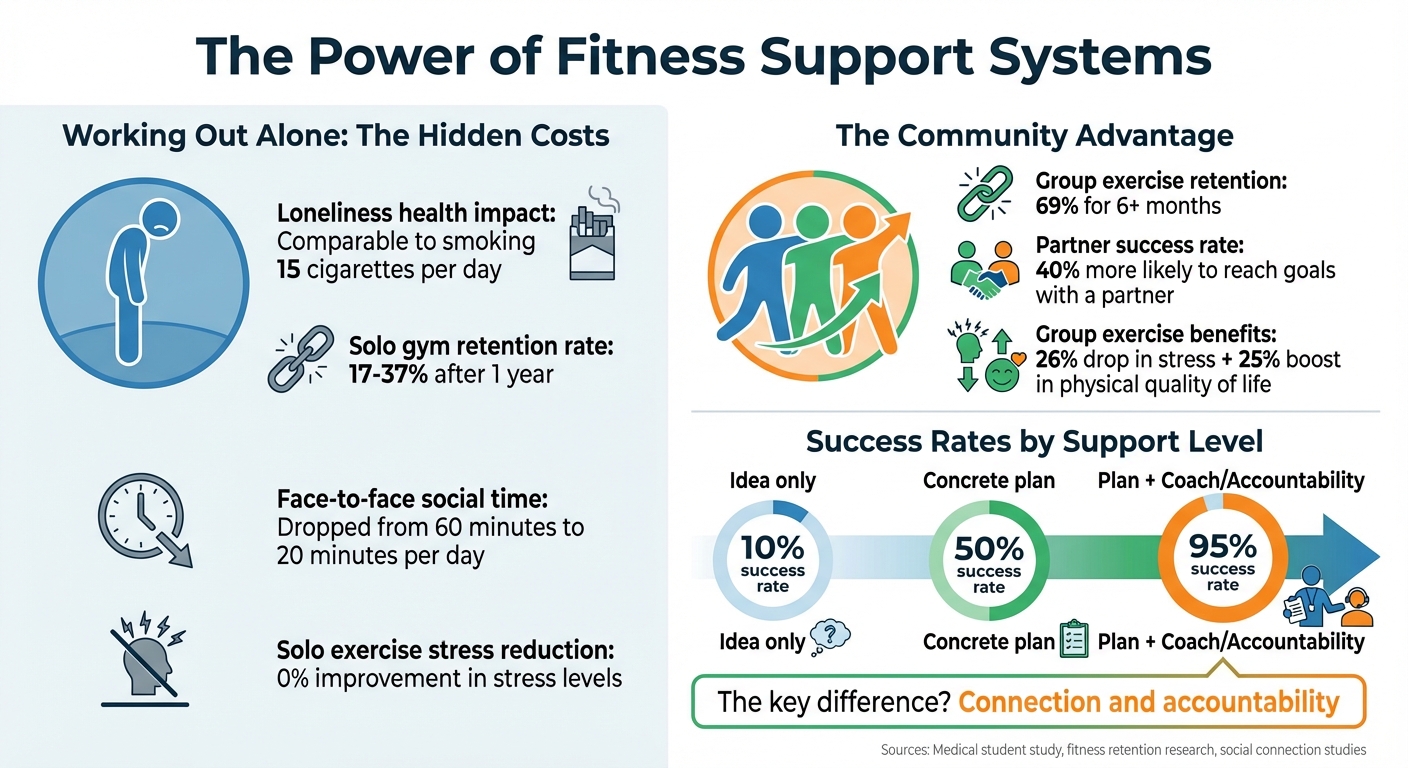
Impact of Fitness Support Systems on Success Rates and Mental Health
Why Fitness Feels Lonely
The Mental Impact of Working Out Alone
Exercising alone can feel like an uphill battle, and not just physically. One key element often missing is the psychological lift that comes from having someone cheer you on. Think about it – something as simple as a high-five after a tough set can keep your momentum going. Without that, workouts can feel like a grind, turning what should be a positive routine into an internal tug-of-war. Over time, this loneliness can create a mental gap between you and your fitness goals, making each session feel more like a chore than a commitment.
But it’s not just about staying motivated. Loneliness during fitness is tied to deeper emotional struggles. It’s that hollow feeling of disconnection, even if you’re surrounded by others at the gym. For some, the fear of being judged – whether it’s for being the slowest or looking visibly tired – can spark social anxiety. This can make working out feel like an exposed, isolating experience where your struggles are on full display.
Social Media and Comparison Culture
The digital world doesn’t always help. In fact, it often makes things worse. Scrolling through fitness content on social media can amplify feelings of loneliness. A nine-year study involving nearly 7,000 adults found that more time spent on social media was linked to increased feelings of loneliness across all age groups. Why? Because digital interactions – whether you’re sharing your own progress photos or liking someone else’s – lack the depth of real-life connections. You might feel a fleeting sense of connection, but over time, it doesn’t fill the need for genuine community.
"Social media gives us a sense of connection in the moment, but over extended periods, it does not fill the deeper sense of community and belonging that real life relationships provide."
Then there’s the constant comparison. Social media often showcases curated, polished versions of fitness journeys, leaving you feeling like you’re falling behind. This creates a frustrating cycle: you turn to social platforms seeking connection, but the endless comparisons leave you feeling even more isolated. And it’s not just online – Americans now spend an average of only 20 minutes per day with friends face-to-face, a steep drop from 60 minutes in earlier years. These digital pressures only add to the challenges of working out alone, especially when combined with unstructured routines and a lack of personalized coaching.
Problems with Unstructured Exercise Routines
Without a plan – or someone counting on you to show up – fitness can quickly slide down your list of priorities. Unstructured exercise lacks the accountability that turns “I should work out” into “I have to work out.” This makes it easier to skip sessions when life gets busy or motivation wanes. It’s no surprise that solo gym memberships have a retention rate of just 17–37% after a year, compared to a 69% retention rate for group exercise programs lasting six months or more.
Even when solo exercisers stick with it, the results can feel underwhelming. A study of medical students found that those who worked out alone exercised twice as long as group participants but didn’t see any changes in their stress levels. In contrast, group exercisers experienced a 26% drop in stress and a 25% boost in physical quality of life. Our bodies are wired for movement in groups, and solo workouts often miss out on the energy, stress relief, and sense of connection that come from shared activity. Without structure, community, or feedback, it’s easy to feel like something’s missing.
sbb-itb-29cdcd8
Solutions to Combat Loneliness in Fitness
Join a Fitness Community Online or Locally
Being part of a fitness community can make a world of difference. Studies show that 95% of people who start a weight loss journey with a partner are 40% more likely to reach their goals. Why? Accountability. When someone else is counting on you, skipping a workout feels less like an option. Plus, seeing others achieve their goals can inspire you to keep pushing forward.
But it’s not just about the numbers. A fitness community can completely change how you approach your workouts. Instead of struggling through challenges on your own, you’ll have a group to celebrate wins with and lean on during tough times. It’s the kind of structure that turns inconsistent efforts into solid, lasting habits.
"The difference between those who stay and those who leave often comes down to one thing: connection." – Fitness CF
If you’re working out at home, online fitness groups or apps can provide that same sense of accountability virtually. Prefer face-to-face interaction? Group classes like yoga or HIIT are great options. Arrive a little early or stick around after class to spark conversations – it’s a natural way to connect with others who share your goals.
Work with an Accountability Coach
Sometimes, having a professional in your corner can make all the difference. Research shows that when you turn a fitness idea into a concrete plan, your chances of following through jump from 10% to 50%. Add a coach into the mix, and your likelihood of success skyrockets to 95%.
A coach does more than just hand you a workout plan. They provide personalized feedback, help uncover blind spots in your routine, and track key progress markers like energy levels, mood, and body composition. They also help you set SMART goals – those that are Specific, Measurable, Achievable, Realistic, and Time-bound – and break them down into manageable steps. With regular reminders and check-ins, a coach ensures you stay on track.
"Accountability isn’t weakness, it’s strategy. When you build connections around your fitness journey, you’re not just relying on motivation. You’re creating systems, structure, and support that make success inevitable." – Kaylin Switzer, Coach, Psyres
Even virtual coaching can be incredibly effective. With tools like messaging and shared progress tracking, you can maintain a strong sense of accountability. For those looking for a solution that combines coaching with community, the next option might be worth exploring.
Choose N The Mix Nutrition‘s Bundle Package for Complete Support
If you’re searching for a way to tackle fitness and nutrition together, N The Mix Nutrition offers a comprehensive bundle that combines both into one seamless system. For $179 per month, this package provides custom macro-based nutrition plans, personalized workout programs, and unlimited messaging with your coach – ensuring constant support.
The bundle also includes access to the N The Mix app, which connects you to a community of like-minded individuals for shared motivation and encouragement. Weekly check-ins and habit-based coaching cover everything from mindset to sleep and movement, creating a roadmap that takes the guesswork out of your journey.
Here’s what users are saying:
Brian L. shared, "I won’t be able to go back to the overweight me again. I learned a ton during the challenge, gained some confidence and had fun doing it".
Jodi Y. added, "This program changed my life. I am doing things at 47 that I never thought I would do".
New users can try this all-in-one support system with a 14-day free trial, giving you a risk-free way to experience the benefits of coaching and community firsthand.
Building Long-Term Habits for Connection and Progress
Weekly Check-Ins for Tracking and Motivation
Weekly check-ins tie your goals to measurable outcomes, creating a routine that keeps you focused and engaged. These aren’t just about stepping on a scale – they’re about staying connected to your journey. Research highlights a stark difference in follow-through rates: setting a plan increases your likelihood of success from 10% to 50%, and adding regular check-ins with a coach or partner pushes that number up to an impressive 95%.
This approach works, in part, because of something called the Hawthorne Effect. Essentially, people are more likely to stick to their commitments when they know someone is paying attention. Having someone review your week can help you stay on track and avoid losing momentum. These check-ins don’t just focus on weight – they capture a broader picture, including sleep, stress, and energy levels, which often explain physical changes.
To make these sessions meaningful, go beyond just tracking numbers. Use the "Power 5" Questions to spark deeper reflection:
- What was your biggest win this week?
- What was your biggest struggle?
- How compliant were you on a scale of 1–10?
- How are your energy and stress levels?
- What events are coming up next week that you need to plan for?
These questions create a sense of connection, helping you feel supported and understood. By consistently reviewing your progress, you don’t just measure results – you also cultivate a mindset shift that fosters positivity and growth.
Mindset Tools for Overcoming Isolation
While tracking progress is crucial, refining your mindset plays an equally important role in staying connected and avoiding isolation. The way you talk to yourself shapes your overall experience. For instance, changing your internal script from "I have to work out" to "Working out helps me feel good" can turn exercise into something you look forward to rather than a chore.
Focusing on behavior-based goals rather than outcome-based ones can make a huge difference. Instead of stressing over a goal like "lose 20 pounds", which can feel daunting, shift your focus to actions you can control, such as "walk for 20 minutes daily". This shift helps you feel more in control and builds resilience against setbacks.
Journaling is another great tool for deepening your connection to your progress. By tracking your energy, mood, and emotional state weekly, you can spot patterns and celebrate wins that might not show up on the scale. You might also try a visual reward system, like putting a dollar in a jar for every completed workout. These small, tangible rewards serve as reminders of your commitment and give you something to celebrate.
Another effective strategy is the "5-for-5 Connection Challenge." Each day for five days, take one simple action to connect with someone – whether that’s expressing gratitude, offering support, or asking for help. This builds a sense of community and reminds you that you’re not alone in your journey. Accountability isn’t about pressure – it’s about creating a partnership that supports your growth.
The Power of Accountability and Community in Fitness Transformation
Conclusion
Feeling isolated in your fitness journey doesn’t have to be the norm. Studies show that professional coaching and a supportive community can make all the difference by offering accountability, tailored advice, and the emotional strength to overcome challenges.
The key to long-term success lies in finding the right support system. Often, the difference between those who thrive and those who give up is a sense of connection – a program that adapts to your lifestyle and addresses feelings of isolation.
N The Mix Nutrition takes a proactive approach to combat loneliness with their comprehensive program. They combine 1:1 coaching, weekly check-ins, and a vibrant community through their app. Their Bundle Package, priced at $179/month, includes personalized nutrition and fitness coaching, along with unlimited messaging support, ensuring you’re never left to face obstacles alone. One client described their experience as life-changing, achieving results they once thought were out of reach. This is your chance to turn isolation into a source of motivation.
With a two-week risk-free trial, you can see firsthand how personalized coaching and community support can transform your journey. It’s an investment in a system designed to turn your commitment into steady, lasting progress.
Stop going it alone. Visit N The Mix Nutrition to learn how their habit-based approach can guide you toward sustainable results while feeling supported every step of the way.
FAQs
How do I find a fitness community that fits me?
Finding a fitness community that fits your goals and interests can make a big difference in staying motivated. Start by looking for groups that align with what you enjoy. For example, search social media using hashtags like #YourCityFitness to discover local options. You can also join fitness classes or clubs nearby to meet like-minded people.
If you’re more into remote workouts, online support groups or virtual workout buddies are great alternatives. Fitness apps often have features to help you connect with others who share similar goals. The key is to choose a group that feels like a good match for your needs – it’ll help you stay both motivated and connected.
What should I ask for in an accountability partner or coach?
When you’re selecting an accountability partner or coach, it’s important to consider their reliability, support, and dedication to helping you reach your goals. Ask yourself: Will they check in with you consistently? Are they willing to give honest, constructive feedback? Can they help keep you motivated when things get tough?
It’s also crucial to clarify expectations upfront. For example, discuss how often you’ll communicate and what kind of support you can expect. Ideally, choose someone who is equally committed to their own fitness journey. This way, accountability becomes a two-way street, and you can inspire each other to stay on track.
How can I stay consistent when I work out at home?
To keep up with home workouts, treat them as appointments you can’t miss – literally block time for them on your calendar. Set goals that are realistic and break them into smaller, achievable steps. Stick to a routine to build consistency. Don’t underestimate the power of social support, either. Join online workout groups or connect with virtual fitness partners to stay motivated and accountable. With solid planning, clear goals, and a supportive network, sticking to your solo workout routine becomes much more manageable.