
Does your body feel off? If you’re constantly tired, struggling to lose weight, craving sweets, or feeling cold all the time, your metabolism might need attention. Your metabolism is responsible for converting food into energy, and when it slows down, it affects everything from your energy levels to your weight and mood.
Here are 7 signs your metabolism might need repair:
- Persistent fatigue, even with enough rest.
- Difficulty losing weight, despite diet and exercise.
- Constant cravings for sugar or carbs.
- Digestive issues like bloating or constipation.
- Dry skin, brittle nails, and thinning hair.
- Feeling cold frequently or having cold hands and feet.
- Mood swings, brain fog, or trouble concentrating.
How to fix it? Focus on small, sustainable changes:
- Avoid extreme calorie cuts; eat enough to fuel your body.
- Prioritize protein to support muscle and boost energy.
- Stick to consistent meal times to stabilize blood sugar.
- Incorporate strength training to build muscle and increase your resting energy burn.
For tailored solutions, consider working with a coach to create a personalized plan that fits your unique needs. Addressing these issues early can improve energy, mood, and overall health.
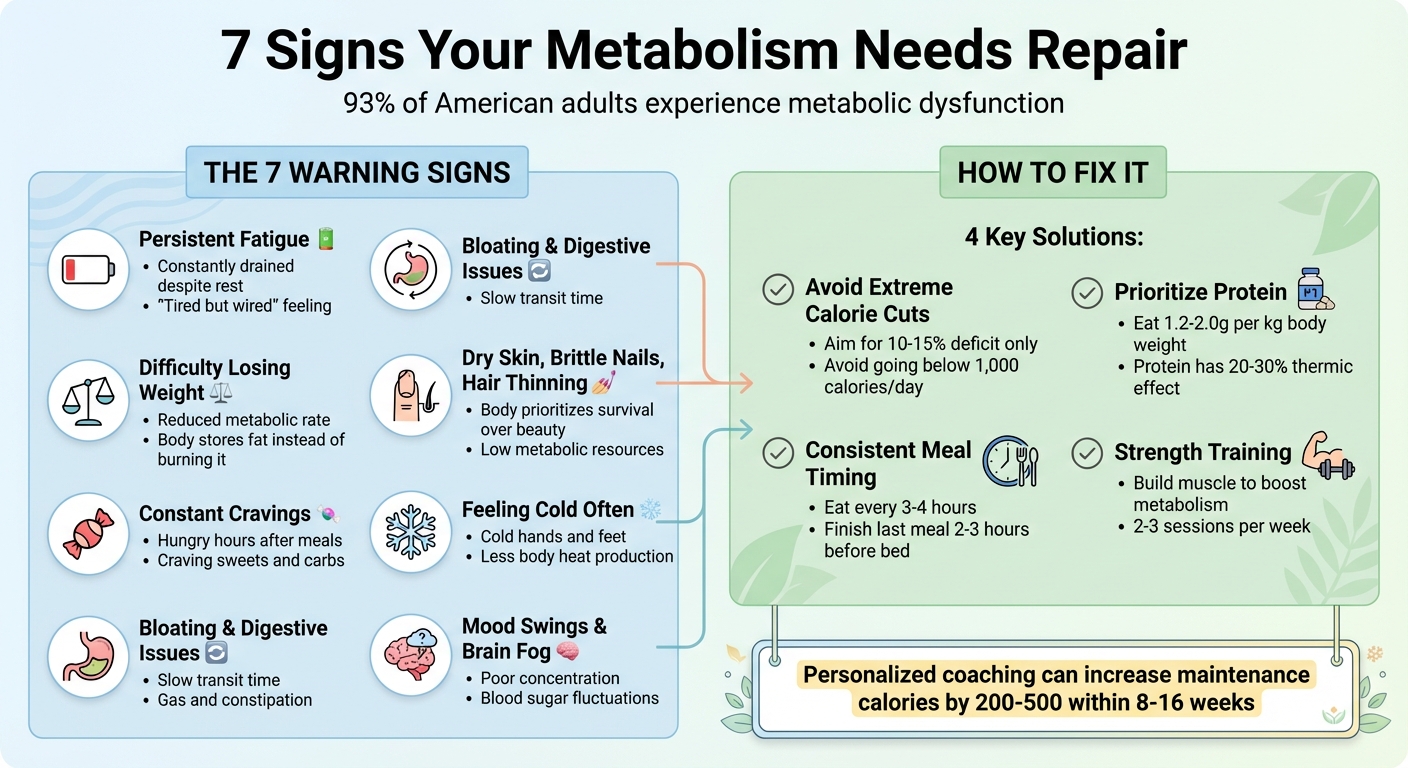
7 Signs Your Metabolism Needs Repair and How to Fix It
Repair a Destroyed Metabolism in 10 Steps
sbb-itb-29cdcd8
7 Signs Your Metabolism Needs Repair
Your body has a way of letting you know when your metabolism isn’t working as it should. These signs show how well your cells are turning food into energy. With over 93% of American adults experiencing some level of metabolic dysfunction, spotting these red flags early can help you address potential issues before they escalate. Here are seven key signs that your metabolism might need some attention.
1. Persistent Fatigue
Feeling constantly drained, no matter how much rest you get? When your mitochondria – the energy powerhouses of your cells – aren’t converting nutrients efficiently, your body can feel energy-starved. This can lead to a "tired but wired" sensation that even caffeine can’t shake.
2. Difficulty Losing Weight
If shedding pounds feels impossible despite cutting calories and exercising, a sluggish metabolism might be to blame. A reduced metabolic rate means fewer calories burned at rest. Additionally, insulin resistance may cause your body to store excess nutrients as fat instead of using them to maintain muscle.
3. Constant Cravings
If you’re hungry or craving sweets just hours after a meal, it could signal blood sugar imbalances. Insulin resistance prevents your cells from absorbing glucose efficiently, tricking your brain into thinking you’re still hungry. This imbalance, influenced by reduced leptin signaling and elevated ghrelin levels, often leads to cravings for sugary or carb-heavy foods.
4. Frequent Bloating and Digestive Issues
A slow metabolism can affect digestion too. When your gastrointestinal tract experiences "slow transit time" – a delay in moving food through the system – you might feel bloated, gassy, or constipated. This not only causes discomfort but can also interfere with nutrient absorption.
5. Dry Skin, Brittle Nails, and Hair Thinning
When your body is running low on metabolic resources, it prioritizes essential functions over things like hair, skin, and nails. The result? Dry skin, thinning hair, and brittle nails.
"Your body prioritizes survival, not beauty, when resources are low." – Monique Gutierrez, Tucson Wellness MD
6. Feeling Cold Often
Metabolism plays a key role in generating body heat. When your metabolic rate slows, your body produces less heat, leaving you feeling cold – even when others are comfortable. If you’re constantly layering up or notice cold hands and feet, it could be a sign that your body isn’t burning fuel efficiently.
7. Mood Swings and Poor Concentration
Your brain relies on a steady supply of glucose to function. When blood sugar levels fluctuate due to metabolic issues, it can disrupt your brain’s fuel source. This often leads to brain fog, trouble focusing, and mood swings – especially a few hours after eating. In some cases, these imbalances might even interfere with sleep, causing you to wake up early with a racing mind.
Steps to Repair and Optimize Your Metabolism
Your metabolism isn’t stuck – it can be recalibrated. By making thoughtful adjustments, you can help your body regain its natural rhythm and efficiency. Here’s how you can tackle metabolic challenges head-on.
1. Avoid Extreme Calorie Cuts
Drastically slashing calories might seem like a quick fix for weight loss, but it often backfires. When you eat too little – especially below 1,000 calories a day – your body activates "survival mode." This triggers adaptive thermogenesis, where your metabolism slows down to conserve energy. For example, in one study, participants consuming just 890 calories daily for three months experienced a dramatic drop in their daily calorie burn – an average of 633 fewer calories.
This extreme restriction doesn’t just slow your metabolism; it also causes muscle loss. Since muscle tissue burns more calories than fat, losing it further reduces your resting metabolic rate.
"When you restrict calories, your body conserves energy and slows metabolism… to ensure you have enough energy when fuel from reduced food intake is scarce." – Graciously Nourished
Instead of cutting too much, aim for a small calorie deficit – 10–15% below your maintenance level. If you’ve been dieting for a while and notice your progress stalling, consider reverse dieting. Gradually increase your calorie intake by 50–100 calories per week until you reach maintenance levels. This slow adjustment helps your metabolism adapt without sudden weight gain.
2. Prioritize Protein and Balanced Macros
Not all calories affect your metabolism equally. Protein stands out because it has the highest thermic effect of food (TEF) – your body uses 20–30% of protein’s calories just to digest and process it. In contrast, carbs require only 5–10%, and fats use 0–3%.
"Protein takes more energy to digest, absorb and process compared to carbs and fats – and that demand can temporarily boost your metabolic rate." – Marcio Griebeler, MD, Endocrinologist, Cleveland Clinic
Protein also helps preserve muscle during weight loss. Muscle is metabolically active, so maintaining it is key to keeping your metabolism humming. Research suggests eating at least 0.5 grams of protein per pound of body weight (around 1.2 grams per kilogram) can significantly reduce the metabolic slowdown that often accompanies weight loss.
But don’t overlook the other macros. Healthy fats (like those in avocados, nuts, and fatty fish) support hormone production and fuel your mitochondria, while complex carbs (from whole grains and legumes) provide steady energy and replenish glycogen stores. A balanced approach is best: aim for 1.2–2.0 grams of protein per kilogram of body weight daily, along with sufficient fats (at least 0.7 grams per kilogram) and carbs tailored to your activity level.
3. Focus on Consistent Meal Timing
When you eat can be just as important as what you eat. Your metabolism follows a circadian rhythm, and irregular eating patterns can disrupt the internal clocks in your organs, like the liver and pancreas. Skipping meals, for instance, can signal your body to conserve energy, slowing your metabolic rate. It can also lead to blood sugar crashes, which raise cortisol levels and throw off your metabolism.
Studies show that eating earlier in the day and maintaining consistent meal times can improve metabolic health and support weight loss – even when calorie intake and activity levels remain constant.
To optimize your meal timing:
- Eat every 3 to 4 hours to stabilize blood sugar and avoid energy dips.
- Start your day with a high-protein breakfast to kickstart your metabolism.
- Finish your last meal between 5:00 PM and 7:00 PM – at least 2 to 3 hours before bedtime. This timing aligns with your body’s natural melatonin rise, which reduces glucose tolerance.
- Consider consuming about half of your daily calories earlier in the day for better metabolic outcomes.
Personalized Nutrition and Fitness for Metabolic Repair
When it comes to improving metabolic health, personalized nutrition and fitness strategies take things a step beyond basic dietary changes. They focus on your individual physiological needs, offering a tailored approach that generic plans simply can’t match.
Research has shown that identical meals can lead to drastically different blood sugar and triglyceride responses from person to person. Factors like hormones, muscle mass, stress levels, and even past dieting experiences all shape how your metabolism works. That’s why working with a coach who targets the underlying causes of metabolic slowdown – rather than just slashing calories – is so important. Personalized plans emphasize muscle maintenance, hormonal balance, and sustainable habits, which are key to lasting metabolic health. In fact, people using tailored nutrition programs are 30% more likely to stick with them compared to those following generic advice.
1. Custom Macro-Based Nutrition Plans
Counting macros – protein, carbs, and fats – provides a more precise way to manage your diet than just tracking calories. It ensures your body gets the nutrients it needs to maintain muscle, regulate hormones, and avoid the metabolic slowdown known as adaptive thermogenesis.
"Macro counting – tracking proteins, carbs, and fats – allows precise control over your calorie intake while fueling your body optimally. Unlike generic calorie counting, it promotes hormonal balance, muscle retention, and energy stability." – Jodi Yerta, Owner & Lead Coach at N The Mix Nutrition
A personalized macro plan can even help you reverse diet – a method of gradually increasing calories by 50–100 per week to restore your metabolism without rapid fat gain. This process can improve your metabolic rate by 10–15%. With the right approach, clients have been able to increase their maintenance calorie levels by 200–500 calories within 8–16 weeks.
N The Mix Nutrition’s Nutrition Coaching provides tailored support for $129/month, including 1:1 coaching, custom macro plans, weekly check-ins, and app-based progress tracking. Their team of 16 certified coaches uses biofeedback – such as energy levels, sleep patterns, and menstrual cycles – to fine-tune your plan as your metabolism improves. Plus, they offer a 14-day free trial to help you get started.
While nutrition is essential for metabolic repair, strength training plays a critical role in maintaining and building muscle.
2. Strength Training and Fitness Programs
Muscle is a metabolic powerhouse. It burns more calories at rest than fat, meaning the more lean mass you have, the higher your resting metabolic rate (RMR). Strength training also helps prevent the muscle loss – and subsequent metabolic slowdown – that often comes with weight loss.
After age 30, adults lose 3% to 8% of their muscle mass per decade, which directly affects metabolic efficiency. Resistance training can counteract this decline. Studies show that combining nutrition plans focused on muscle retention with strength training can help preserve 20% to 30% more lean mass during fat loss compared to calorie restriction alone. Even a single 45-minute strength session can keep your metabolism elevated for up to 14 hours afterward.
N The Mix Nutrition’s Personal Training offers personalized workout programs for $99/month. These include 1:1 coaching, progress tracking, and regular adjustments to your plan as you build strength. The focus is on compound exercises – like squats, deadlifts, and push-ups – that engage multiple muscle groups, maximizing both calorie burn and muscle growth.
3. Bundle for Complete Support
For those looking to maximize their metabolic recovery, combining personalized nutrition and fitness is the way to go. The Bundle Package offers a comprehensive solution for $179/month, including 1:1 online coaching for both nutrition and fitness, custom macro plans, personalized training programs, unlimited messaging, and regular check-ins.
This combined approach tackles the root causes of metabolic issues – such as hormonal imbalances, muscle loss, and energy dips – that generic programs often overlook. Most people start seeing improvements in energy, sleep, and strength within 4 to 12 weeks, alongside noticeable progress in their overall metabolic health. The bundle provides the guidance, tools, and accountability needed to make these changes last for the long term.
Conclusion
Your metabolism isn’t just a background process – it’s a key indicator of your overall health. Persistent fatigue, difficulty losing weight, constant cravings, or always feeling cold are your body’s way of signaling that something needs attention. With many adults experiencing some level of metabolic dysfunction, addressing these signs early can help prevent more serious conditions like Type 2 diabetes and heart disease. The first step toward improvement is recognizing these signals and taking action.
The path to repairing your metabolism doesn’t involve extreme diets or quick fixes. Severe calorie restriction, for example, can backfire by slowing your metabolism even further. Instead, focus on sustainable changes: prioritize protein intake (1.2–2.2 g/kg of body weight), incorporate strength training 2–3 times a week to build muscle, and maintain consistent meal timing to stabilize blood sugar. These strategies address the root causes, helping your body function more efficiently.
For those looking to go beyond the basics, personalized coaching can provide tailored solutions that generic plans simply can’t. N The Mix Nutrition offers customizable options like Nutrition Coaching ($129/month), Personal Training ($99/month), and a Bundle Package ($179/month). These services provide expert guidance, accountability, and strategies designed to reverse metabolic slowdown. Many clients report improved energy, better sleep, and increased strength when they commit to a plan that works for their unique needs.
Taking steps to support your metabolism now can lead to lasting benefits. Whether it’s adjusting your diet, starting a strength training routine, or investing in professional coaching, consistency and addressing the underlying causes are what truly restore your body’s natural efficiency and promote long-term wellness.
FAQs
How do I know if it’s my metabolism or my thyroid?
Symptoms such as fatigue, weight fluctuations, and low energy can be linked to both metabolism issues and thyroid disorders, making it tricky to pinpoint the cause. Hypothyroidism, for instance, often presents with additional signs like sensitivity to cold, dry skin, and hair thinning. These are typically confirmed through blood tests measuring TSH, T3, and T4 levels.
However, if your thyroid tests come back normal but these symptoms persist, the root cause might be metabolic rather than thyroid-related. It’s essential to consult a healthcare provider to identify the underlying issue and explore the right treatment options.
How long does it take to “repair” a slow metabolism?
Repairing a sluggish metabolism isn’t an overnight fix – it can take anywhere from a few weeks to a couple of months. The timeline largely depends on how consistent you are with making lifestyle changes. Many people begin to notice encouraging signs, like better energy levels or more regular hunger cues, during this period. While results differ from person to person, sticking to healthy habits is the real game-changer for achieving lasting improvements.
What tests or markers can confirm metabolic dysfunction?
Healthcare providers rely on lab tests and biomarkers to evaluate metabolic health. These tests typically include panels that measure blood sugar, lipid levels, and markers of insulin resistance. Important indicators include:
- Fasting glucose: Should be under 100 mg/dL.
- Triglycerides: Ideally less than 150 mg/dL.
- HDL cholesterol: Above 50 mg/dL for women and 40 mg/dL for men.
- Blood pressure: Around 120/80 mm Hg is considered optimal.
- Waist circumference: No more than 35 inches for women and 40 inches for men.
Additional tests, like HbA1c and insulin levels, are also used to spot early warning signs of metabolic issues. These provide a broader picture of long-term blood sugar control and insulin function.