
When it comes to improving your health, two key professionals can help: nutrition coaches and personal trainers. Here’s the main difference:
- Nutrition coaches focus on your eating habits and lifestyle changes, helping you build sustainable, healthier patterns. They guide you in understanding your food choices, creating personalized nutrition plans, and addressing challenges like emotional eating or stress-related habits.
- Personal trainers specialize in exercise. They design workout plans tailored to your fitness goals, teach proper form, and track your physical progress to improve strength, endurance, and overall performance.
Key Takeaways:
- Nutrition is responsible for 70-80% of your results in health and fitness.
- Personal trainers are ideal for improving physical performance and learning safe exercise techniques.
- Nutrition coaches are best for tackling eating habits and achieving long-term dietary goals.
- Combining both services provides faster progress and better overall results.
If you’re unsure where to start, focus on what’s holding you back. Struggling with workouts? Consider a personal trainer. Facing diet-related challenges? A nutrition coach can help. For the best results, pairing both services can create a balanced approach to fitness and nutrition.
Trainer vs Nutritionist: They’re Not the Same
sbb-itb-29cdcd8
What is Nutrition Coaching?
A nutrition coach works with you to develop sustainable, healthy eating habits instead of handing you a one-size-fits-all meal plan. The goal isn’t about rigid rules – it’s about understanding your eating patterns and creating behaviors that stick for the long haul. The emphasis is on behavior change, helping you uncover the "why" behind your choices and building the skills to maintain them.
"Being a nutrition coach means being a partner in change [who] can offer guidance when needed . . . or allowing the client to come to the right decision by asking the right questions." – Mike Fantigrassi, NASM Master Instructor
Coaches check in regularly to track your progress, tweak strategies based on how you’re feeling (like hunger, energy, or sleep), and keep you accountable – especially when life gets hectic. Let’s explore how nutrition coaches make this happen and the benefits they bring.
What Nutrition Coaches Do
Nutrition coaches take a hands-on approach to help you meet your goals. They calculate your caloric and macronutrient needs, whether you’re aiming to lose fat, gain muscle, or just feel healthier overall. Beyond numbers, they teach practical skills like reading food labels, managing portion sizes, and grocery shopping confidently. Unlike cookie-cutter diets that restrict entire food groups, nutrition coaching adapts to your unique lifestyle, schedule, and preferences.
One key role of a coach is tackling the obstacles that make healthy habits hard to stick with. For instance, if you’re always on the go, they might suggest the "3-Minute Meal" strategy – quick, no-cook options like tuna mixed with Greek yogurt on rice cakes. This kind of flexibility can make a huge difference; one client improved their adherence to 90% by switching from rigid meal prep to a portable, travel-friendly approach.
Coaches also simplify intimidating tasks like meal prep by breaking them into smaller, manageable steps.
It’s important to note that nutrition coaches don’t handle medical conditions. They won’t prescribe therapeutic meal plans, diagnose issues, or recommend disease-specific supplements. For those needs, a Registered Dietitian trained in medical nutrition therapy is the right professional to consult.
Who Should Work with a Nutrition Coach?
Nutrition coaching is ideal for anyone looking for personalized, lifestyle-friendly support. It’s especially helpful for generally healthy individuals aiming to improve their eating habits, body composition, or athletic performance. If you know what you should do but struggle to follow through, a coach can provide the structure and accountability you need.
Some groups that benefit most include those focused on weight loss or muscle gain, individuals dealing with emotional eating or difficulty recognizing hunger cues, and busy professionals who need practical strategies to fit their demanding schedules. Athletes and fitness enthusiasts also use nutrition coaches to fine-tune their diets for better performance and faster recovery through nutrient timing.
"Nutrition coaches guide people’s dietary habits to improve their health, body composition, or athletic performance." – Steve Kamb, Founder, Nerd Fitness
Before hiring a coach, it’s essential to check their credentials. Look for certifications from reputable organizations like Precision Nutrition, NASM, or ISSA. Pricing varies, with sessions typically costing $50 to $150 per hour, though some online platforms offer daily support for as little as $3 per day. Keep in mind, insurance usually doesn’t cover nutrition coaching unless the coach is also a Registered Dietitian treating a specific medical condition.
What is Personal Training?
Personal training is all about creating a workout plan tailored to your unique needs, abilities, and goals – whether that’s building muscle, losing fat, or preparing for a specific event. Trainers use exercise science to help improve your strength, endurance, flexibility, and overall fitness.
"The job of a personal trainer is to help you achieve your fitness goals as quickly, efficiently, and safely as possible." – Trevor Thieme, C.S.C.S.
A personal trainer doesn’t just hand you a plan and walk away. They work closely with you during every session, focusing on proper form, adjusting intensity when needed, and tracking your progress week by week. This hands-on approach has been proven to lead to greater strength gains and higher workout intensities compared to working out solo.
What Personal Trainers Do
Trainers start by assessing your posture, movement, flexibility, balance, cardiorespiratory fitness, and body composition. This helps them establish a baseline and identify areas to focus on. From there, they design a workout plan tailored to your health history, physical abilities, and specific goals. Everything is personalized – from the types of exercises to the duration, intensity, and rest intervals.
One of their key roles is ensuring proper technique and form, which is crucial for getting results while avoiding injuries. They’ll show you how to use equipment safely, spot you during lifts, and tweak your program as you progress. Setting SMART (specific, measurable, achievable, relevant, and time-bound) goals is another way they keep you motivated and accountable.
On average, personal training sessions cost between $75 and $100, with higher fees if additional services like nutrition coaching are included. This customized approach makes personal training valuable for people at all fitness levels.
Who Should Work with a Personal Trainer?
Personal training is a great option for anyone looking for expert guidance, whether you’re just starting out, aiming for a specific physique goal, or trying to improve athletic performance safely. Beginners can learn proper techniques and avoid injuries, while seasoned gym-goers benefit from breaking through plateaus with a fresh, expert-designed program.
Certain groups see especially strong benefits. For example, if you’re training for a specific goal like running a 10K, bench pressing a particular weight, or reducing body fat, a trainer can create a focused plan to help you succeed. Those recovering from injuries or dealing with physical limitations also benefit from corrective exercises that address muscle imbalances. Busy professionals, meanwhile, value the efficiency and structure that a trainer provides.
It’s worth noting that while trainers can offer general nutrition tips, they aren’t qualified to prescribe meal plans or treat medical conditions unless they hold additional certifications in dietetics or medicine. For the best results, pairing personal training with informed nutrition advice can help you achieve your fitness goals more effectively.
Main Differences Between Nutrition Coaching and Personal Training
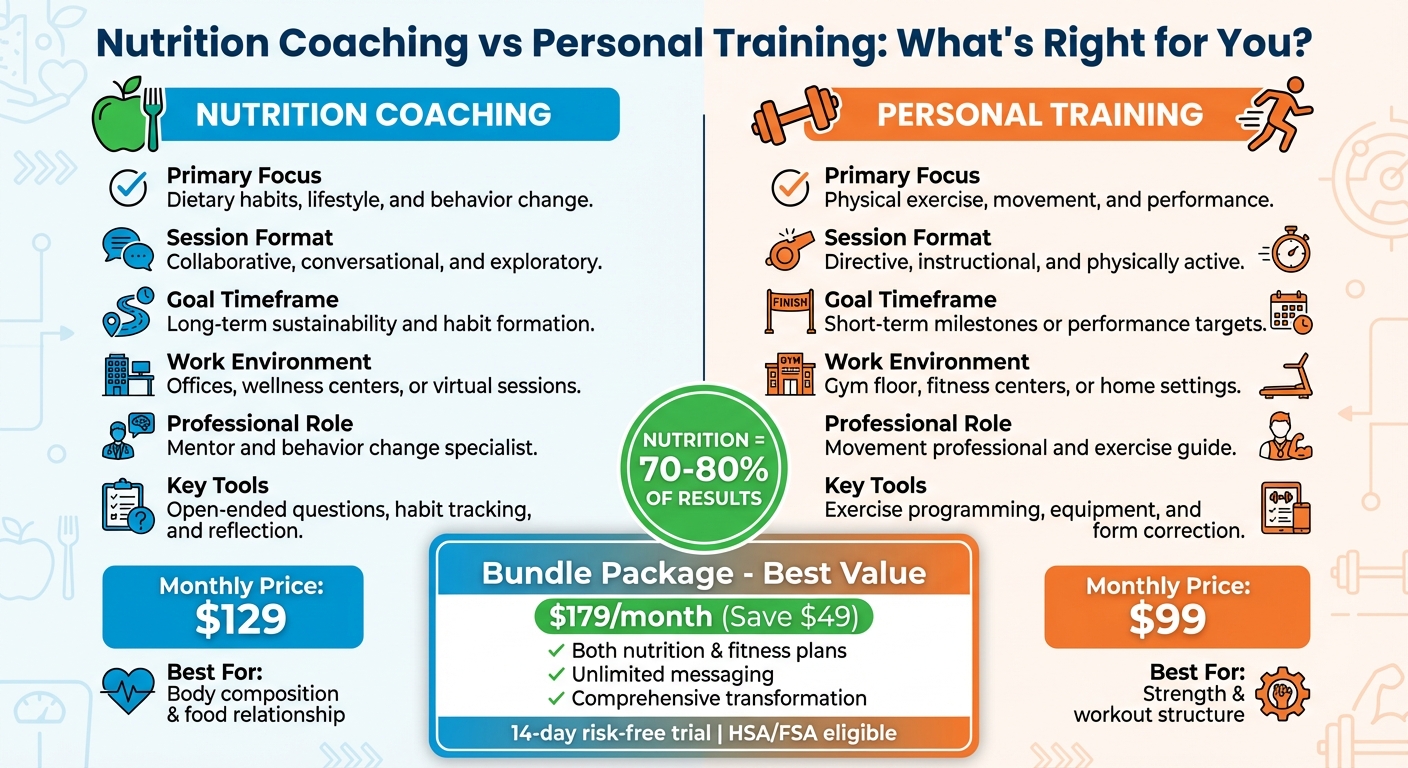
Nutrition Coaching vs Personal Training: Key Differences and Pricing Comparison
Focus and Goals: Nutrition vs Fitness
Personal trainers excel at creating exercise programs and improving physical performance. They focus on things like correcting your form, adjusting workout intensity, and helping you crush specific fitness goals – all while keeping you active on the gym floor.
Nutrition coaches, on the other hand, are all about behavior change. They focus on your eating habits, lifestyle factors like sleep and stress, and building long-term, healthier patterns. Instead of just handing you a meal plan, they work with you to uncover challenges like stress-eating or skipping meals. It’s a collaborative process.
"Nutrition planning is just giving clients the fish. They aren’t learning anything from the experience. Nutrition coaching, however, teaches clients how to fish and gives them the ability to make healthful decisions for a lifetime." – Jessie Newell, ACE Study Coach
The difference in approach is clear: personal trainers guide you with direct instructions to hit short-term fitness milestones, while nutrition coaches take a more conversational, client-led path to help you create sustainable habits. Let’s break it down further with a side-by-side comparison.
Comparison Table: Nutrition Coaching vs Personal Training
| Category | Nutrition Coaching | Personal Training |
|---|---|---|
| Primary Focus | Dietary habits, lifestyle, and behavior change | Physical exercise, movement, and performance |
| Session Format | Collaborative, conversational, and exploratory | Directive, instructional, and physically active |
| Goal Timeframe | Long-term sustainability and habit formation | Short-term milestones or performance targets |
| Work Environment | Offices, wellness centers, or virtual sessions | Gym floor, fitness centers, or home settings |
| Professional Role | Mentor and behavior change specialist | Movement professional and exercise guide |
| Key Tools | Open-ended questions, habit tracking, and reflection | Exercise programming, equipment, and form correction |
These differences can help you figure out whether you need a nutrition coach, a personal trainer, or maybe even a combination of both to meet your health and wellness goals. Each plays a distinct role, but together, they can create a powerful partnership for your overall well-being.
Services Offered by N The Mix Nutrition
Nutrition Coaching Services
For $129 per month, N The Mix Nutrition offers personalized nutrition coaching designed to create sustainable eating habits. The service includes a customized nutrition plan tailored to your goals – whether that’s fat loss, muscle gain, or metabolic repair. You’ll receive 1:1 coaching, access to a dedicated app, weekly check-ins, and ongoing accountability.
Rather than prescribing exact meals, the program focuses on providing macro targets, portion guidance, and practical tips, such as strategies for navigating social events like BBQs. For clients aiming to lose fat, the plan incorporates moderate calorie deficits (300–500 kcal), high protein intake (2.0–2.5 g/kg), and carb cycling for fat loss and muscle gain. Those pursuing muscle gain are supported with high-protein targets (1.6–2.2 g/kg) and resistance training protocols. Additionally, specialized guidance is available for clients using GLP-1 medications like Ozempic. These protocols help prevent the typical 30% muscle loss associated with such medications by emphasizing protein intake at 2.3–2.5 g/kg.
"I won’t be able to go back to the over weight me again. I genuinely thought my diet was good before I joined. I learned a ton during the challenge, gained some confidence and had fun doing it." – Brian L.
Personal Training Services
The personal training program, priced at $99 per month, provides a customized workout plan tailored to your fitness level and goals. Certified trainers offer 1:1 guidance, adjust your program as needed, and track your progress to ensure your workouts evolve with your fitness journey.
Sessions are available virtually (via Zoom) or in-person for clients in the Kansas City area. The program emphasizes resistance training, particularly for clients on GLP-1 medications, recommending three resistance training sessions per week to protect lean muscle mass. Whether you’re starting fresh or looking to push your limits, the trainers adapt your plan using data-driven insights to help you achieve your goals.
"This program changed my life. I am doing things at 47 that I never thought I would do." – Jodi Y.
Comparison Table: Service Options and Pricing
| Feature | Nutrition Coaching | Personal Training | Bundle Package |
|---|---|---|---|
| Monthly Price | $129 | $99 | $179 |
| Primary Focus | Nutrition & Habits | Fitness & Performance | Holistic (Both) |
| 1:1 Coaching | Included | Included | Included (Nutrition + Fitness) |
| Plan Type | Personalized Nutrition Plan | Customized Workout Plan | Both Nutrition & Fitness Plans |
| Check-ins | Weekly | Regular Progress Tracking | Regular + Unlimited Messaging |
| App Access | Included | Included | Included |
| Best For | Body composition & food relationship | Strength & workout structure | Comprehensive transformation |
The Bundle Package, available for $179 per month, combines both services and saves you $49 compared to purchasing them separately. It offers unlimited messaging with your coach, coordinated nutrition and fitness plans, and is ideal for those seeking faster results. Additionally, all programs include a 14-day risk-free trial and are HSA/FSA eligible.
Combining Nutrition Coaching and Personal Training
Benefits of Addressing Both Nutrition and Fitness
Focusing on both nutrition and fitness creates a powerful combination. Exercise sparks physical changes, while proper nutrition provides the fuel and materials your body needs to make those changes happen.
The stats don’t lie: nutrition is responsible for about 70% to 80% of your results when working toward health and fitness goals. If you only focus on workouts, it’s easy to hit a plateau. But when you combine nutrition and training, you can experience faster fat loss, better muscle growth, and more consistent energy levels to power through your sessions [33,34].
"When you have a nutritionist and a trainer working together, magic happens. Fat loss becomes easier, muscle gain is more efficient, and your energy levels skyrocket."
– RxFit
Timing your meals correctly also makes a big difference. For example, eating a protein-carb snack 30–60 minutes before your workout and having protein within two hours after can help maximize energy and speed up muscle recovery. This kind of coordination helps you avoid common pitfalls like under-fueling or feeling drained, which can derail your progress.
But it’s not just about physical changes. This integrated approach also tackles areas like sleep, stress, and mental clarity, which are often overlooked when focusing on just one aspect. Studies show that combining nutrition and fitness is far more effective at preventing chronic conditions like diabetes and heart disease than addressing them separately. Plus, when something isn’t working – like dehydration or overtraining – having both a trainer and a nutritionist on hand makes it easier to fix the problem quickly. This seamless collaboration creates a well-rounded plan that supports your overall health.
The Bundle Package at N The Mix Nutrition
To make the most of these benefits, the Bundle Package at $179 per month combines nutrition and personal training into one streamlined program. You’ll save $49 compared to buying these services individually, making it a cost-effective option for a fully integrated health journey.
With this package, you get unlimited messaging with your coaches, ensuring you’re never left guessing. From day one, your nutrition and workout plans are designed to complement each other, eliminating conflicting advice or mismatched strategies. For instance, your protein targets are aligned with your resistance training schedule, and your calorie intake adjusts based on whether it’s a workout or rest day.
This program is designed for maximum results, offering complete support for both your diet and exercise, along with unmatched accountability. Instead of two separate services, you get a unified system where your coaches work together to fine-tune your progress. The package also includes a 14-day risk-free trial and is HSA/FSA eligible, making it accessible for those using health savings accounts.
If you’re on GLP-1 medications like Ozempic, this bundle is especially useful. It helps you hit high protein targets (2.3–2.5 g/kg) to prevent muscle loss while supporting three weekly resistance training sessions to maintain lean mass. Achieving this level of coordination is tough when working with separate professionals who don’t communicate, but this program makes it simple and effective.
Choosing the Right Option for Your Goals
When deciding between personal training and nutrition coaching, it’s important to focus on what’s currently holding you back. If you’re new to exercise, concerned about injuries, or unsure about proper form, personal training offers hands-on guidance and technical instruction to get you started safely and effectively. On the other hand, if you’ve been consistent with workouts but feel stuck in a plateau – or if stress and poor eating habits are draining your energy – nutrition coaching might be the key to overcoming those challenges.
It’s worth noting that nutrition plays a major role in shaping your body composition. While personal trainers zero in on your workouts – helping you execute exercises safely and correctly – nutrition coaches take a broader view, addressing factors like sleep, stress, and daily habits. As one expert at Virtuagym aptly stated:
"Most clients don’t fail in the gym, they fail in the kitchen".
For those looking to combine the benefits of both, the Bundle Package at $179 per month offers a cost-effective solution. This option integrates personal training and nutrition coaching, ensuring your macro-based nutrition plan works in harmony with your workout schedule. Coaches collaborate to adjust your plan based on training and rest days, creating a seamless strategy tailored to your goals.
Finally, think about your lifestyle and availability. Nutrition coaching often provides the flexibility of virtual sessions, while personal training typically requires gym access and specific equipment. Start by addressing your most pressing need, but combining both approaches can offer the well-rounded support needed for long-term success.
FAQs
Do I need a nutrition coach or a personal trainer first?
Choosing between a nutrition coach and a personal trainer comes down to your main goals. If you’re looking to improve your eating habits, manage your weight, or tackle specific dietary needs, a nutrition coach is the way to go. On the other hand, if your focus is on building strength, improving overall fitness, or following a structured workout plan, a personal trainer is the better fit. For the best of both worlds, consider combining their expertise to create a balanced approach to your health and wellness.
Can I do nutrition coaching and personal training at the same time?
Yes, combining nutrition coaching with personal training is absolutely possible, and it’s a smart way to approach overall wellness. Many fitness professionals provide both services, creating a comprehensive plan that tackles your fitness goals from two angles: your diet and your workout routine. By addressing these areas together, you can build a balanced strategy that supports your progress more effectively.
When should I see a registered dietitian instead?
If you’re dealing with medical conditions or have specific nutritional needs, like managing diabetes, addressing food allergies, or handling gastrointestinal problems, it’s a good idea to consult a registered dietitian. These professionals provide evidence-based advice, create personalized nutrition plans, and offer medical nutrition therapy tailored to your situation.
What sets registered dietitians apart from nutrition coaches or personal trainers is their ability to handle complex health concerns. They have the clinical training to manage these issues, and their services are often covered by insurance when addressing medical conditions, rather than just general wellness or fitness goals.