
Starvation mode is often misunderstood. While extreme calorie restriction can slow your metabolism, it doesn’t stop fat loss entirely. This slowdown, called adaptive thermogenesis, is your body’s way of conserving energy. However, weight loss remains possible with a calorie deficit, though the process may slow as your body adjusts.
Key points to know:
- Severe calorie cuts (e.g., under 1,200 calories/day) can lead to muscle loss, hormonal imbalances, and health risks.
- Moderate deficits (15–20% below maintenance) are safer and more effective for fat loss.
- Strength training, adequate protein intake, and occasional diet breaks help maintain metabolism and muscle mass.
The takeaway? Avoid extreme diets. Instead, focus on gradual, balanced approaches, such as personalized nutrition coaching, for sustainable results.
IS "STARVATION MODE" A REAL THING? (What The Science Says)
sbb-itb-29cdcd8
The Starvation Mode Myth
"Starvation mode" is a term often used to describe the belief that severe calorie restriction stops fat burning altogether. Registered dietitian Erin Decker explains:
Starvation mode is a colloquial term used to describe the idea that severe calorie restriction leads to the body holding on to excess fat.
This idea has fueled fears within diet culture, leaving many to worry that cutting calories too drastically might sabotage their progress. The truth, however, is more complex. While the body does respond to calorie restriction through a process called adaptive thermogenesis, this doesn’t mean fat loss grinds to a halt. Adaptive thermogenesis is a temporary and reversible adjustment, unlike the exaggerated claims surrounding the "starvation mode" myth.
Where the Starvation Mode Theory Came From
The roots of this theory lie in our evolutionary past. When food was scarce, our bodies developed energy-saving mechanisms to survive periods of famine. Over time, this natural response has been distorted into the belief that even moderate calorie deficits can "ruin" your metabolism. Research, such as the Minnesota Starvation Experiment and studies on participants from The Biggest Loser, shows that extreme calorie restriction does lead to metabolic adaptations – but these scenarios are vastly different from the moderate deficits most people follow for weight loss. The confusion stems from misinterpreting these extreme cases and applying them to everyday dieting.
Common Myths About Starvation Mode
One widespread myth is that any calorie deficit will force your body to hold onto fat. In reality, as long as you’re in a calorie deficit, you will lose weight, though the rate may slow as your body adjusts. Another misconception is that intermittent fasting triggers starvation mode. Short-term fasting does not mimic the long-term metabolic changes caused by chronic, severe underfeeding.
These myths often gain traction because weight loss tends to slow over time. As your body shrinks, it needs less energy to maintain itself. This natural plateau is frequently mistaken for a metabolic shutdown, but it’s simply your body adapting to its new energy demands.
How Your Metabolism Actually Responds to Calorie Restriction
Your body doesn’t simply “shut down” when you cut calories – it adjusts. This natural adaptation is your body’s way of responding to a calorie deficit, a survival mechanism designed to conserve energy. To understand this process better, let’s dive into the concept of adaptive thermogenesis.
What Is Adaptive Thermogenesis?
Adaptive thermogenesis is the scientific term for what some mistakenly call "starvation mode." Essentially, it’s when your body reduces its energy expenditure more than what would be expected from weight loss alone. This adjustment affects all aspects of your daily energy burn – your basal metabolic rate, the energy used for digesting food, physical activity, and even everyday movements. Over time, your body becomes more efficient, meaning it uses less energy to perform the same tasks.
This metabolic slowdown is largely driven by hormonal shifts. As you restrict calories, levels of hormones like leptin, thyroid hormone (T3), insulin, and testosterone decrease, while cortisol levels rise. These hormonal changes signal your body to conserve energy.
Here’s an example: For every pound of weight you lose, your body burns about 5.8 fewer calories per day. If you manage to lose and maintain a 10% reduction in body weight, your total daily calorie burn could drop by 15–25%. Adaptive thermogenesis itself accounts for roughly 108 fewer calories burned daily, making up about 48% of the overall reduction in resting energy expenditure during the early stages of weight loss.
What Research Shows
Scientific studies back up this concept. One of the most well-known examples is the Minnesota Starvation Experiment, led by Dr. Ancel Keys at the University of Minnesota between October 1944 and November 1945. In this study, 32 healthy men followed a 24-week semistarvation diet, losing between 19% and 28% of their body weight. The observed metabolic decline was split between two causes: 65% was due to tissue loss, while the remaining 35% came from the body’s adaptive response. Importantly, even though their metabolism slowed, the men continued to lose weight, proving that adaptive thermogenesis slows – but doesn’t completely halt – fat loss.
More recent studies provide additional insights. For example, research on women following moderate weight loss plans found their resting metabolic rate dropped by about 50 calories per day immediately after weight loss. However, this effect was temporary, and their metabolism returned to normal within one to two years. As researcher Kevin Hall puts it:
Behavior is in the driver’s seat and REE [resting energy expenditure] is along for the ride.
These findings highlight the importance of sustainable calorie deficits. While extreme calorie cuts can trigger significant metabolic adaptations, moderate and gradual approaches are less likely to provoke severe energy conservation responses.
Calorie Deficits vs. Starvation: Understanding the Difference
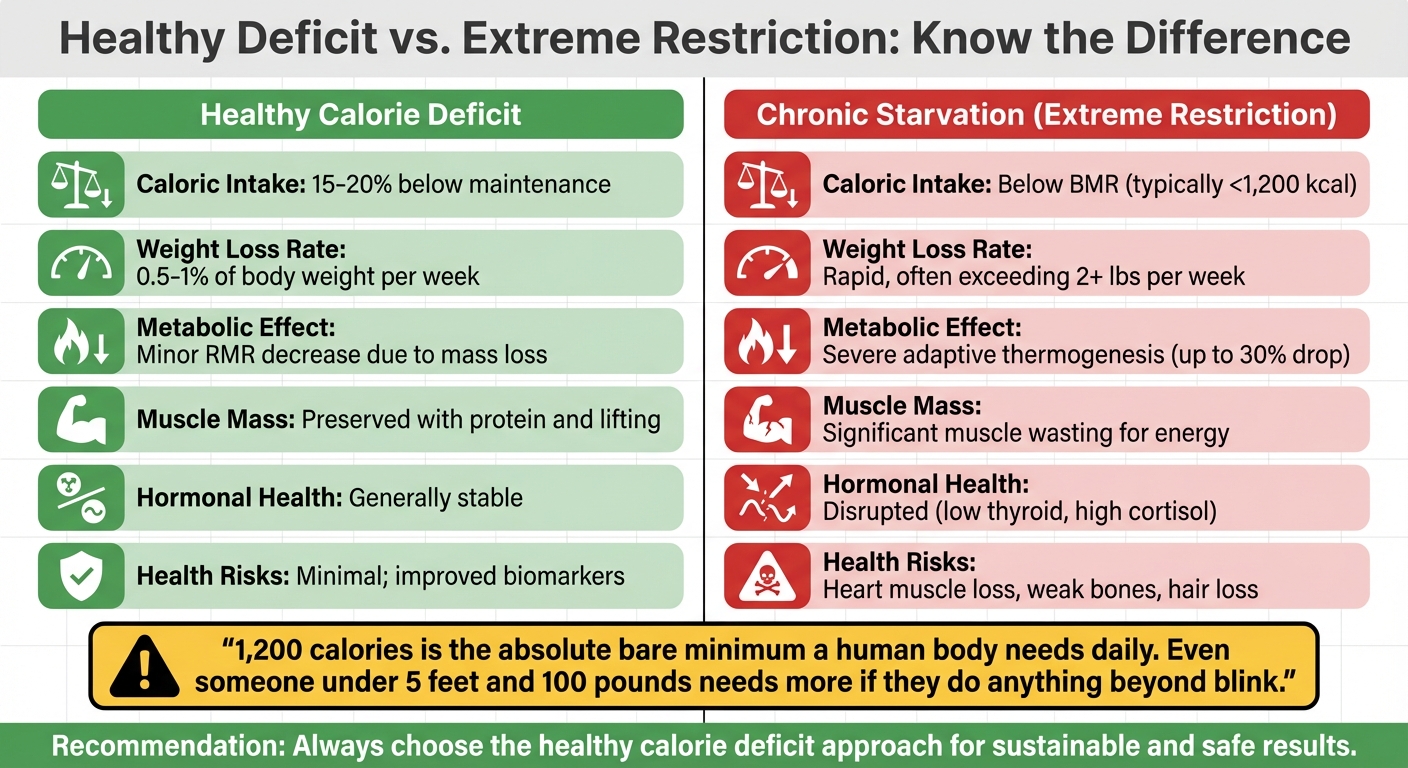
Healthy Calorie Deficit vs Extreme Restriction Comparison Chart
A calorie deficit, when done thoughtfully, is not the same as extreme calorie restriction that can trigger your body’s survival mechanisms. Knowing the difference is key to keeping your metabolism and overall health intact.
Moderate Deficits vs. Extreme Restriction
A well-planned calorie deficit aims for gradual weight loss – about 0.5% to 1% of your body weight per week. This approach helps your body burn fat while preserving muscle and keeping hormones balanced.
On the other hand, extreme calorie restriction – eating fewer calories than your Basal Metabolic Rate (BMR), often less than 1,200 calories a day – pushes your body into "survival mode". Scott Keatley, a registered dietitian, emphasizes:
1,200 calories is the absolute bare minimum a human body needs daily. Even someone under 5 feet and 100 pounds needs more if they do anything beyond blink.
Here’s a side-by-side comparison of the two approaches:
| Feature | Healthy Calorie Deficit | Chronic Starvation (Extreme Restriction) |
|---|---|---|
| Caloric Intake | 15–20% below maintenance | Below BMR (typically <1,200 kcal) |
| Weight Loss Rate | 0.5–1% of body weight per week | Rapid, often exceeding 2+ lbs per week |
| Metabolic Effect | Minor RMR decrease due to mass loss | Severe adaptive thermogenesis (up to 30% drop) |
| Muscle Mass | Preserved with protein and lifting | Significant muscle wasting for energy |
| Hormonal Health | Generally stable | Disrupted (low thyroid, high cortisol) |
| Health Risks | Minimal; improved biomarkers | Heart muscle loss, weak bones, hair loss |
This comparison makes it clear: extreme calorie restriction can lead to serious health problems.
Health Risks of Extreme Calorie Restriction
Unlike moderate deficits that your body can adapt to over time, extreme calorie cuts can wreak havoc on your system. When you slash calories too much, your body responds by disrupting hormonal balance – thyroid hormones drop, leptin levels decrease, and cortisol surges. This hormonal chaos can actually encourage fat storage, particularly around your organs, which is the opposite of what most people want.
The physical toll doesn’t stop there. Severe calorie restriction slows your metabolism, leads to muscle breakdown, and can weaken your heart and bones. Without enough energy from food, your body starts breaking down muscle tissue to survive. Women may lose their menstrual cycles, and libido often plummets for everyone.
The psychological effects are just as concerning. Extreme restriction can lead to an unhealthy preoccupation with food, mood swings, depression, and withdrawal from social activities. These symptoms are your body’s way of signaling distress. Essentially, insufficient calories can disrupt nearly every system in your body.
Next, we’ll dive into effective and sustainable ways to lose fat without harming your metabolism or overall health.
How to Lose Fat Without Damaging Your Metabolism
When it comes to losing fat, the key is to do so in a way that protects your metabolism. By fueling your body properly, maintaining muscle mass, and incorporating recovery periods, you can achieve fat loss without triggering a metabolic slowdown.
Using Macro-Based Nutrition
Instead of just cutting calories, focus on a macro-based approach that balances protein, carbohydrates, and fats. As Kris Gunnars, BSc explains:
Protein is the king of macronutrients when it comes to losing weight.
Why is protein so important? It helps preserve muscle mass during a calorie deficit, increases the thermic effect of food (which can burn an extra 80–100 calories daily), and helps control hunger. To lose fat in a sustainable way, aim for a calorie deficit of about 15–20% below your maintenance level. This approach keeps your hormones in check and supports long-term results. Tracking your intake consistently ensures you hit your protein goals and stay within your calorie range.
But nutrition is only part of the equation. Strength training and recovery play a crucial role, too.
Why Strength Training and Recovery Matter
Resistance training is essential for protecting your metabolism while losing fat. Studies show that women on an 800-calorie diet who included resistance exercises maintained both their muscle mass and metabolic rate. On the other hand, those who only did cardio or skipped exercise altogether experienced muscle loss and a drop in metabolism. Since muscle mass directly affects your metabolic rate, keeping it intact is crucial for long-term weight management.
Recovery is just as important. Alternating two weeks of calorie restriction with two weeks of eating at maintenance can help regulate key hormones like leptin and thyroid. It typically takes about 7 days of eating at maintenance to restore thyroid hormone levels, with an additional week needed to fully maximize the benefits. These recovery periods prevent your body from lowering its energy expenditure, making them a powerful tool for sustainable fat loss.
For tailored guidance that ties all these strategies together, working with a coach can make a big difference.
Working with a Coach for Long-Term Results
Navigating the balance between energy intake and a calorie deficit can be tricky. That’s where professional coaching comes in. N The Mix Nutrition offers personalized macro-based plans starting at $129 per month. Their certified coaches provide 1:1 support, weekly check-ins, and app-based tracking to help you stay on track with your fat loss and metabolic goals.
For a more comprehensive approach, their $179 per month bundle includes both custom nutrition plans and workout programs. With weekly check-ins and unlimited messaging, this program provides the accountability and adjustments you need to overcome plateaus and maintain a healthy metabolism.
Conclusion
Starvation mode doesn’t stop fat loss entirely; instead, it’s your body’s way of slowing down metabolism through adaptive thermogenesis – a natural survival mechanism. In this discussion, we’ve tackled common misconceptions and clarified that while your metabolism may slow, it doesn’t mean weight loss is impossible.
This knowledge lays the foundation for practical, sustainable fat loss strategies. To manage metabolic adaptation effectively, aim for a moderate calorie deficit of about 15–20% below your maintenance level. Make protein a priority to protect muscle mass, and include strength training 2–3 times weekly. Adding strategic diet breaks – like eating at maintenance for a week or two – can help regulate hormones such as leptin and thyroid, reducing the likelihood of hitting a plateau.
For those seeking extra support, N The Mix Nutrition offers personalized coaching starting at $129 per month. Their certified coaches provide tools like macro tracking, accountability, and expert adjustments to help you lose fat while keeping your metabolism in check.
FAQs
How do I know if my calorie deficit is too aggressive?
Your calorie deficit might be pushing too hard if you’re dealing with intense hunger, overwhelming fatigue, or notice your weight loss slowing down significantly. While it’s true that the body adapts to lower calorie intake by conserving energy, the idea of "starvation mode" – where your weight loss completely halts – is a myth. What actually happens is your body becomes more efficient at using energy, which can make progress slower, but it doesn’t stop it entirely.
What should I do when weight loss stalls even though I’m eating less?
When weight loss seems to hit a wall even though you’re eating less, it’s likely due to a process called adaptive thermogenesis. This happens when the body adjusts to a lower calorie intake by slowing down its metabolism. It’s a natural response, not your body stubbornly "holding onto fat."
To push past this plateau, consider boosting your daily activity levels or making sure you’re eating enough to maintain muscle mass. Surprisingly, slightly increasing your calorie intake can sometimes help reset your progress. Focus on sustainable habits to keep moving forward.
How long should a diet break be to help my metabolism recover?
To help your metabolism recover from adaptive thermogenesis, research suggests that a diet break usually lasts about 1 to 2 weeks. This brief pause gives your body time to recalibrate, potentially improving energy balance and supporting better metabolic function.