
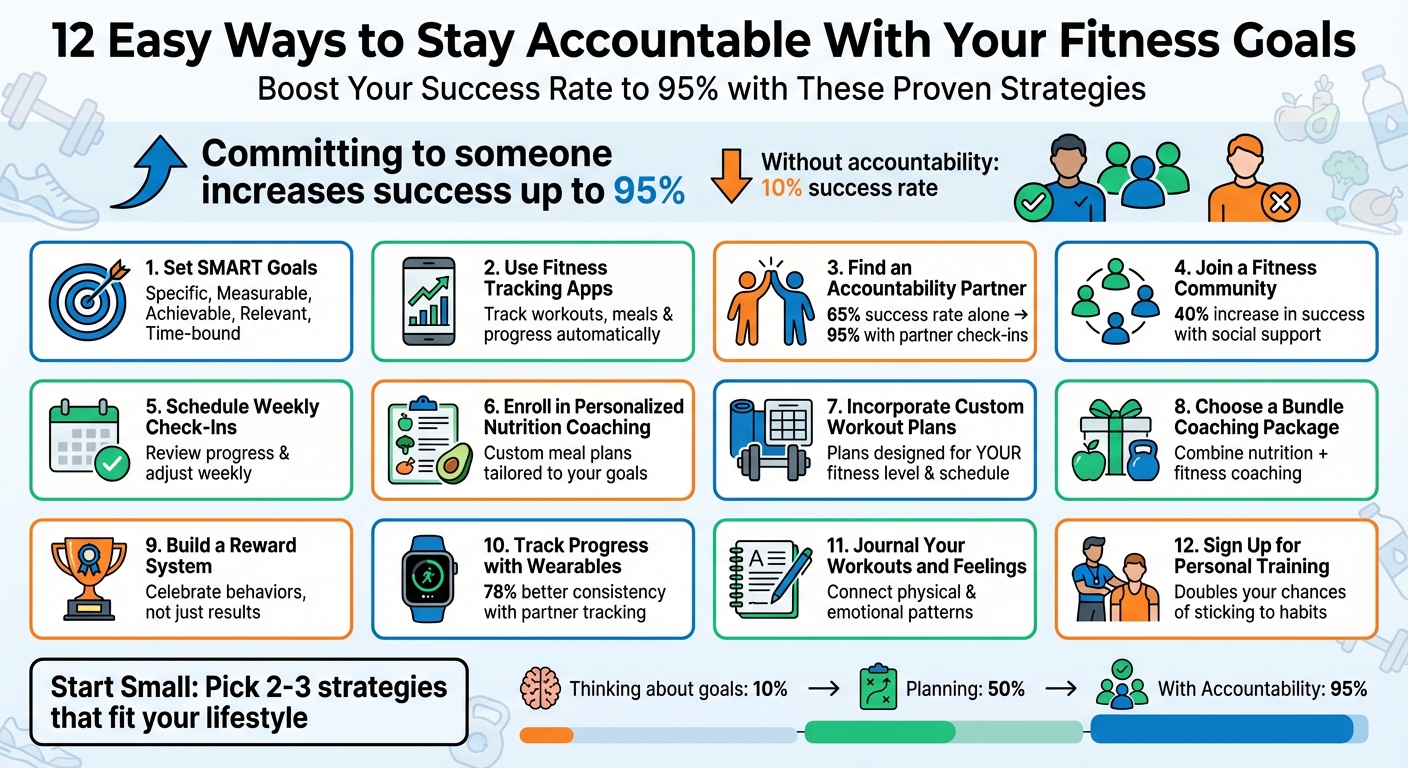
Sticking to fitness goals is tough, but accountability can make all the difference. Studies show that committing to someone or something increases your chances of success up to 95%. Whether you’re aiming to lose weight, build strength, or improve health, accountability bridges the gap between intentions and consistent action. Here’s a quick breakdown of 12 strategies to help you stay on track:
- Set SMART Goals: Specific, Measurable, Achievable, Relevant, and Time-bound goals keep you focused and clear.
- Use Fitness Tracking Apps: Track workouts, meals, and progress with apps that provide reminders and insights.
- Find an Accountability Partner: Partner with someone reliable to stay committed and check in regularly.
- Join a Fitness Community: Surround yourself with like-minded people for motivation and support.
- Schedule Weekly Check-Ins: Reflect on your progress and adjust your approach weekly.
- Enroll in Personalized Nutrition Coaching: Work with a professional to get tailored meal plans and guidance.
- Incorporate Custom Workout Plans: Follow routines designed specifically for your goals and lifestyle.
- Choose a Bundle Coaching Package: Combine nutrition and fitness coaching for a cohesive plan.
- Build a Reward System: Celebrate small wins with non-food rewards to stay motivated.
- Track Progress with Wearables: Use devices like smartwatches to monitor activity and progress in real-time.
- Journal Your Workouts and Feelings: Log exercises and emotions to identify patterns and improve routines.
- Sign Up for Personal Training: Work with a trainer for expert guidance, accountability, and tailored support.
Takeaway: Start small – pick two or three strategies that fit your lifestyle and build from there. Consistency, combined with the right tools and support, is key to achieving your fitness goals.
12 Proven Strategies to Stay Accountable With Your Fitness Goals
10 Ways to Hold Yourself Accountable to Get and Stay Fit
sbb-itb-29cdcd8
1. Set SMART Goals
Goals like "get in shape" or "exercise more" might sound good, but they’re difficult to measure or achieve. That’s where the SMART framework comes into play – it turns vague ideas into concrete, actionable plans.
SMART stands for: Specific, Measurable, Achievable, Relevant, Time-bound.
- Specific: Define exactly what you’re aiming for. Saying "I’ll do resistance training three times a week" is far clearer than a general "exercise more."
- Measurable: Use numbers to track progress, like pounds lost, miles run, or minutes spent in a target heart rate zone.
- Achievable: Set goals that challenge you but are realistic based on your current fitness level. This keeps you motivated without setting you up for failure.
- Relevant: Align your goals with your personal health priorities. For example, if managing high blood pressure is a concern, focusing on aerobic exercise makes more sense than powerlifting.
- Time-bound: Add a deadline to create urgency – whether it’s 8 weeks, 3 months, or another specific timeframe.
"SMART fitness goals are a framework for how you’re going to achieve certain results. If we don’t have something that we’re moving toward or a plan to get there, we can get lost and lose motivation." – Christopher Travers, MS, Exercise Physiologist, Cleveland Clinic
Let’s look at some examples. Instead of saying, "I want to lose weight", try: "I will reduce body fat by 3% in 10 weeks." Or, instead of "I want to get stronger", say: "I will complete 10 goblet squats with a 25-pound kettlebell in 3 months." These goals leave no room for guesswork – you’ll know exactly when you’ve hit your target.
It’s also important to focus on behaviors rather than just outcomes. For instance, instead of fixating on "lose 10 pounds", aim for "eating until satisfied at each meal." Behavioral goals are often more sustainable and lead to long-term success.
Once you’ve set clear, measurable goals, you can boost accountability by using digital tools or joining a supportive community.
2. Use Fitness Tracking Apps
Fitness tracking apps take the guesswork out of sticking to your SMART goals by streamlining how you monitor your progress. These apps work hand-in-hand with devices like Apple Watch or Fitbit, automatically logging your workouts, meals, and daily activities. No need for tedious manual tracking – everything is captured in real-time.
What makes these apps so effective is their ability to turn raw data into visual insights. Whether it’s calories burned, steps taken, or weights lifted, the data is transformed into easy-to-read charts that highlight your progress over time. These visuals not only help you spot patterns but also give you a reason to celebrate those small, consistent wins that keep you motivated.
Another game-changer? Smart notifications. A push alert reminding you of your gym session 30 minutes beforehand helps you treat it like a firm appointment. Gentle nudges to log meals or complete weekly check-ins keep you engaged without feeling overwhelmed. Studies even show that simply keeping a food diary can lead to twice as much weight loss compared to skipping tracking altogether.
When choosing an app, opt for one that works seamlessly with your current tools. If you’re using a fitness tracker, pick an app that syncs with platforms like Apple Health or Google Fit to make logging effortless. Features like barcode scanners for nutrition tracking, progress photo uploads, and in-app SMART goal setting can make accountability feel less like a chore and more like a natural part of your routine. The goal is to let technology become your partner in progress, not a source of friction.
"Motivation is fleeting. Accountability is structural. Motivation says ‘I really want to work out.’ Accountability says ‘If I don’t work out, I lose $50 and disappoint my partner.’" – Goals
3. Find an Accountability Partner
While digital tools can help you track progress, teaming up with a real person adds a layer of commitment that’s hard to replicate. Partnering with someone who shares your fitness goals transforms personal accountability into a shared mission. Research shows that committing your actions to another person increases your chances of success to 65%. Add a specific check-in time, and that number skyrockets to 95%. Without a partner, sticking to goals becomes significantly harder.
Why does this work? Social obligation. It’s easy to skip a workout when you’re only answering to yourself. But knowing someone is waiting for you – whether it’s for a gym session or a progress update – makes backing out far less tempting.
Take Erin P., a kindergarten teacher from Michigan, as an example. In December 2023, she and her coworker Julie W. started daily check-ins and 6:30 AM Peloton rides before work. Julie shared that knowing Erin was "there" gave her the push she needed to consistently get out of bed.
The key is choosing the right partner. Look for someone who is genuinely committed, honest, and reliable when it comes to check-ins. While it might be tempting to pick a close friend, this could backfire if they shy away from giving constructive feedback. Instead, consider a coworker, gym buddy, or someone you know will hold you accountable.
"Your accountability partner should be able to point out any flaws in your approach – you weren’t responsive to their texts this week, you skipped your workout, it doesn’t seem like you’re taking ownership – as well as high-five you for all the good you’re doing." – Stephen Gonzalez, PhD, Executive Board Member for the Association for Applied Sport Psychology
From the start, set clear expectations. Decide how often you’ll check in, agree on how you’ll communicate, and commit to a "never miss twice" rule. Skipping once is human, but missing twice can signal the start of a bad habit. This structure helps build consistency, much like having a dedicated coach.
Next, we’ll look at how joining a supportive fitness community can take your routine to the next level.
4. Join a Supportive Fitness Community
Expanding your fitness journey into a group setting can make a huge difference in staying consistent. Being part of a fitness community means you’re not just accountable to yourself or a single person – you’re surrounded by people who share your challenges, cheer for your progress, and notice when you’re not showing up. This sense of connection can be a game-changer for long-term commitment.
Research shows that women who participate in group fitness classes often exercise more regularly and begin to see fitness as part of their identity, rather than just an activity they do. Sharing your goals with others can increase your chances of success by 40%, as the social pressure to participate makes skipping workouts feel less like an option.
"One of the biggest myths in fitness is that success comes down to willpower alone. In reality, what keeps people consistent isn’t just grit, it’s connection." – Kaylin Switzer, Coach and Founder, Psyres
Take, for instance, the story of four Peloton members – Sara P., Franny L., Alison H., and Aly T. – who, in December 2023, created a sub-group within the "Early Riser Peloton Accountability" Facebook group. Despite living in different locations, they used a group chat to organize daily rides and Power Zone challenges. Their shared structure and encouragement kept them motivated and consistent. Similarly, a client named Kelsey achieved a 25-pound weight loss over five months by participating in structured group training sessions. She credited the expert guidance and the accountability of the group for helping her stick to her goals.
When choosing a fitness community, prioritize groups with knowledgeable leadership, shared objectives, and a supportive atmosphere that celebrates achievements without judgment. Smaller groups of 5–15 people often strike the right balance, with success rates ranging from 70–85%. Larger communities, while offering more variety, can sometimes feel less personal. Whether it’s a local running club, a gym class, or an online group, the key is finding people who will notice your absence and encourage you to get back on track. This kind of community-based accountability works hand-in-hand with other strategies, giving your commitment an extra layer of reinforcement.
5. Schedule Weekly Check-Ins
Adding weekly check-ins to your routine builds on digital tracking and partner support, creating a regular opportunity to align your actions with your goals. These reviews are an essential tool for staying accountable. They’re often seen as the gold standard for keeping on track because they give you enough time to make adjustments while identifying issues early – before they derail your progress. During these check-ins, you can evaluate everything from weight trends to energy levels, successes, and areas that might need improvement.
Interestingly, regular reviews can trigger the Hawthorne Effect – just knowing you’ll be assessed helps keep you motivated and focused. As HubFit Blog puts it:
"The check in is the bridge between the plan and the result. It is the pulse of your coaching business."
Without these consistent evaluations, it’s easy to veer off course without even noticing.
When conducting your weekly review, focus on meaningful trends rather than daily fluctuations, which can often be influenced by factors like salt intake or hormonal changes. Instead, track your weekly weight average and ask yourself questions that uncover key insights: What was your biggest win? What challenges did you face? How compliant were you on a scale of 1–10? How are your energy and stress levels? What obstacles might come up next week? This type of reflection helps you adjust quickly and effectively.
Real-life examples highlight the value of this approach. Take Mikayla, for instance. She scheduled a Monday 7:00 AM weigh-in and combined it with monthly waist measurements. Over time, her weight only dropped by 3 pounds, but her waist circumference decreased by 1 inch every month. This showed that her 200-calorie deficit was working, even when the scale didn’t reflect it. Similarly, Brendan tracked his strength progress with a weekly log. By recording his workouts and tweaking his nutrition, he increased his bench press from 185 pounds to 225 pounds and added 0.5 inches to his arm circumference.
Treat your weekly check-ins as seriously as a doctor’s appointment – schedule them in your calendar and stick to them. Whether you’re working with a coach, such as through N The Mix Nutrition’s programs (which include weekly check-ins as part of their $129/month nutrition coaching or $179/month bundle package), or managing it on your own, consistency is the key to turning intentions into results. As Trainerize emphasizes:
"If it’s not in your calendar, it’s not getting done."
6. Enroll in Personalized Nutrition Coaching
Once you’ve established regular check-ins and a solid support system, taking the step to enroll in personalized nutrition coaching can transform your approach to accountability. Partnering with a nutrition coach shifts accountability from a solo endeavor to a collaborative effort. In fact, studies show that committing to your goals alongside a professional can boost your follow-through rate to an impressive 95%. This isn’t just about self-discipline anymore – it’s about honoring a financial and social commitment that feels more significant.
Unlike one-size-fits-all diet plans that often rely on restrictive measures and can lead to weight regain, personalized coaching focuses on creating lasting behavioral changes. A skilled nutrition coach designs meal plans tailored specifically to you – factoring in your body composition, activity level, and fitness goals. No more guessing what to eat or following generic guidelines. Instead, every recommendation is customized to meet your unique needs.
The real magic lies in the ongoing support. A coach doesn’t just hand you a plan and walk away – they monitor your progress, help you overcome plateaus, and adjust your plan when life inevitably throws you off course. As McKel Hill Kooienga, MS, RD, and Founder of Nutrition Stripped, puts it:
"When you know exactly what to do, how to do it, and when to do it, but it still just isn’t working, accountability is the last piece of the puzzle that will get you to the finish line."
For structured guidance, N The Mix Nutrition offers a $129/month program that includes personalized macro-based plans, weekly check-ins, and one-on-one coaching. If you’re looking for a more comprehensive approach, their $179/month bundle combines nutrition coaching with custom training programs, aligning your eating habits with your fitness goals.
7. Incorporate Custom Workout Plans
Adding a tailored workout plan to your routine helps solidify accountability, much like personalized nutrition coaching. While generic routines from social media aim for the average person, custom plans are built specifically for you. They take into account your fitness level, schedule, available equipment, and personal goals. This approach removes the guesswork and helps you stay on track.
Custom plans often begin with assessments of your strength, endurance, mobility, and flexibility. Some facilities even use advanced tools like DXA scans to create precise, data-driven programs. From there, the plan is designed based on your goals. For example, weight loss plans focus on burning calories while maintaining muscle, whereas muscle-building plans emphasize compound lifts and progressive overload.
These plans also fit seamlessly into your lifestyle. A busy professional might benefit from quick 25-minute high-intensity workouts during lunch breaks. Frequent travelers? No problem – your exercises can be adjusted for minimal equipment, ensuring you stay consistent no matter where you are.
N The Mix Nutrition offers custom workout plans starting at $99 per month. For $179 per month, you can bundle this with personalized nutrition coaching and unlimited messaging support.
To maximize your success, treat your workout sessions like non-negotiable appointments. Block them off in your digital calendar and set a 30-minute reminder beforehand to get in the right mindset. Viewing exercise as a commitment, rather than an option, significantly improves your accountability and follow-through.
8. Choose a Bundle Coaching Package
Combining nutrition and fitness coaching into one package creates a powerful accountability system. Your diet directly fuels your workouts, and your training, in turn, supports your nutritional goals. This approach ensures that what you eat and how you train complement each other seamlessly.
A bundle package goes beyond just convenience – it strengthens your support system. Many people don’t struggle because they lack knowledge; they struggle because they lack the support needed to put that knowledge into action. Features like regular check-ins and personalized workouts ensure that every part of your routine stays on track. With frequent communication through text or app, you stay motivated and can tackle setbacks as they happen.
"I chose NASM’s CNC because it’s not just about handing out workouts – it’s about delivering a premium, all-in-one coaching experience. Pairing training with nutrition coaching creates a unified program." – Everett Miner, NASM-CPT, CNC
N The Mix Nutrition offers a bundle package for $179 per month, which includes personalized nutrition plans with tailored macros, unlimited messaging support, custom training programs, and regular check-ins. This is often more cost-effective than hiring separate professionals. Plus, having a unified team ensures your exercise and nutrition strategies stay aligned.
When choosing a bundle, seek out coaches certified in both personal training and nutrition. This ensures their guidance is grounded in science across both areas. The most effective programs focus on creating lasting behavioral changes, targeting the psychology behind your habits to build a sustainable lifestyle. This integrated approach fosters daily accountability and long-term success.
9. Build a Reward System
Once you’ve set up ways to hold yourself accountable, adding a reward system can make your routine even stronger. Celebrating your wins taps into your brain’s dopamine system, giving you a natural boost that helps reinforce your exercise habit.
The key? Reward your behaviors, not just the results. Instead of waiting until you’ve lost 10 pounds, celebrate the small daily actions – like lacing up your sneakers or completing a 20-minute jog [71, 72].
"A reward system can be very effective for motivation… but it should help you take the daily steps you need to take in order to move yourself closer to achieving your overall goals. It shouldn’t be used as a prize for achieving certain results." – Dr. Sharon Gam, PhD, CSCS
Immediate rewards work better than distant ones. Since your brain craves instant gratification, giving yourself a reward during or right after your workout can help you form habits faster. For example, try temptation bundling – only allow yourself to watch your favorite shows or listen to a specific podcast during exercise. Research shows this approach makes people 51% more likely to work out.
You can also create a tiered reward system, combining small weekly treats with bigger milestones.
"Create small end-of-the-week rewards as well as a large reward at the end of the long-term goal." – Kate Cummins, PsyD
For instance, treat yourself to a professional massage after a week of consistent workouts, upgrade your fitness gear after a month, or plan a weekend getaway after three months. Another idea: start a reward savings jar – drop in $5 every time you complete a workout.
When picking rewards, steer clear of food-based treats that might clash with your nutrition goals. Instead, choose options like self-care indulgences (a relaxing bath or a guilt-free sleep-in), fitness-related purchases (new gym shoes or workout gear), or fun experiences (a comedy show or a phone-free hour) [70, 72, 75]. Even something as simple as marking an "X" on your calendar for every completed workout can give you a psychological boost as you watch your streak grow [73, 74].
10. Track Progress with Wearables
Wearables take digital tracking to the next level, offering a dynamic way to monitor your fitness journey. Devices like fitness trackers and smartwatches provide real-time data, removing the guesswork from your workouts. They automatically track steps, heart rate, sleep quality, blood oxygen levels, and even skin temperature – no manual logging required. Plus, they sync seamlessly with platforms like Apple Health and Google Fit, making it easy to keep all your data in one place [77, 79, 19].
These devices aren’t just about counting steps anymore. Many now measure Heart Rate Variability (HRV) and analyze sleep stages to help you understand whether your body is ready for a tough workout or needs a rest day. This level of insight helps you avoid overtraining and ensures you’re prioritizing recovery. Popular options include the Apple Watch Series X, Fitbit Charge 6, WHOOP 5.0, and Garmin Fenix 8 [77, 79].
A major benefit of wearables is accountability. When you consistently use a tracker, it provides objective data that’s impossible to manipulate. The device records everything automatically, giving you an honest view of your progress. Many wearables also connect to apps where you can share your progress with friends or accountability partners, creating a sense of teamwork. In fact, research shows that partner accountability can boost workout consistency by 78% compared to working out alone [19, 74, 78].
To get started, wear your tracker for a full week to establish your baseline. For example, if your daily step average is 6,000, aim for a realistic increase to 7,000 or 8,000 instead of jumping straight to 10,000. Enable smart notifications to remind you to stand, log meals, or start workouts, and set aside 20–30 minutes each week to review your data and adjust your plan as needed [6, 74].
It’s worth noting that about 30% of users eventually stop wearing fitness trackers, often due to boredom or feeling like the data isn’t useful. To avoid this, focus on tracking metrics that align with your goals – whether that’s improving sleep, increasing daily movement, or monitoring heart rate during cardio sessions. This targeted approach helps keep the data meaningful and feeds into the self-reflection process in your workout journal [78, 6].
11. Journal Your Workouts and Feelings
Journaling isn’t just about keeping track of sets, reps, or miles – it’s a way to connect your physical performance with your emotional and mental state. By writing down your workouts and how you felt before, during, and after each session, you can uncover patterns and insights that fitness apps or wearables might miss. For instance, you may realize you perform better in the evening or notice energy dips during specific points in your menstrual cycle. This deeper level of tracking adds a personal touch to your fitness journey.
"Recording your pre-, during-, and post-workout feelings fosters mindfulness and enhances your mind-body connection." – Emma Middlebrook, Certified Personal Trainer
Including emotional responses in your workout log helps fine-tune your training. Ryan Daniel Beck, Owner and Creative Director of bodyART Training Studios, emphasizes the importance of this practice:
"If you translate what you feel day-to-day into a journal, you will become more in touch with your body’s aches and pains"
Journaling is a simple yet powerful addition to other accountability tools. You don’t need to spend hours doing it – just dedicate 5–10 minutes a day. Pair it with an existing habit, like sipping your morning coffee or winding down before bed. Use prompts to guide your reflections, such as, "Why is this goal important to me?" or "How did I feel during the most challenging part of this workout?" Whether you prefer a physical notebook or a Notes app on your phone, pick a method that feels natural and easy to stick with.
Set aside time each week to review your entries. This reflection can help you spot trends, like days when you feel unusually tired or unmotivated, and make adjustments to your routine. It’s also a chance to celebrate small wins and remind yourself that you’re someone who consistently shows up – a key to staying committed over the long haul.
12. Sign Up for Personal Training
Working with a personal trainer can be a game-changer when it comes to staying accountable. Scheduling a session transforms your workout into a non-negotiable appointment, much like an important business meeting. Research even suggests that having external accountability can double your chances of sticking to positive habits.
But accountability isn’t just about showing up. Trainers keep an eye on your progress between sessions, noticing missed workouts or dips in consistency. As Nicholas Fox from Made2Move Fitness explains:
"Accountability is the missing ingredient that turns intentions into lasting results"
This level of attention taps into the Hawthorne Effect – the idea that you’re more likely to follow through on your commitments simply because you know someone is tracking your progress. Combined with tools like digital trackers and support networks, a trainer ensures that no workout goes to waste.
Beyond accountability, personal trainers help make every exercise both safe and effective. They provide real-time feedback on your form, minimizing injury risks while ensuring your movements are purposeful. Plus, trainers design workout plans tailored to your goals and lifestyle. Train with Dave highlights this personalized approach:
"We are your partner and coach… supporting every aspect of training and nutrition"
If this sounds like the boost you need, N The Mix Nutrition offers Personal Training for $99/month. This package includes a custom workout plan, one-on-one coaching, advice on development, plan adjustments, and progress tracking. Treat your sessions like fixed appointments, set calendar reminders, and share any hurdles during check-ins so your trainer can tweak your plan as needed.
Conclusion
Accountability turns good intentions into tangible results – even when early alarms or long days drain your energy. The strategies outlined here, from setting SMART goals to using tracking apps or teaming up with a coach, provide a framework to keep you on track, no matter how you’re feeling.
Research shows that simply thinking about a fitness goal gives you a 10% chance of achieving it. Planning bumps that to 50%, but adding external accountability – like a coach, trainer, or workout partner – raises your success rate to an impressive 95%. This data highlights why a solid accountability system is so important.
You don’t need to dive into all 12 strategies at once. Start small – maybe pick two or three that align with your lifestyle. For instance, you could schedule workouts as if they’re appointments and use a fitness app to track your progress. Or, combine the support of a community with professional coaching. The real magic happens when you mix different types of accountability – whether it’s personal, social, digital, or professional – to create a system that keeps you going when motivation dips.
"Accountability is foundational for achieving your fitness aspirations. It means taking ownership and responsibility over things like what you eat, how much you move, and your overall lifestyle".
That sense of ownership, when paired with the right support, is what separates those who achieve their goals from those who fall short. Building this foundation of accountability is at the heart of what we offer.
At N The Mix Nutrition, our coaching programs are designed around these proven strategies. Whether you choose Nutrition Coaching ($129/month), Personal Training ($99/month), or the Bundle Package ($179/month) that combines both, you’ll find the tools and support to turn your goals into lasting habits. Choose what works for you, stay consistent, and see how accountability can transform your fitness journey.
FAQs
What are 2–3 accountability strategies I should start with?
- Track Your Progress: Keep tabs on your workouts, meals, and achievements using fitness apps or a simple journal. Seeing your progress laid out can be a great motivator.
- Set Clear Goals: Make your goals specific and realistic. Whether it’s running a certain distance or lifting a specific weight, clear targets help keep you on track.
- Schedule Workouts: Treat your workouts like any other important appointment. Add them to your calendar and set reminders to make sure you stick to the plan.
These practical steps can help you stay consistent and committed to your fitness journey.
How do I find an accountability partner who will actually push me?
To find an accountability partner who will keep you on track, focus on someone who is dependable, driven, and shares a commitment to achieving goals. Look for a person who offers constructive feedback, communicates clear expectations, and sticks to regular check-ins. Choosing someone with a bit more experience in fitness can also be a great motivator, pushing you to stay dedicated and strive for progress.
What should I track each week to know I’m improving?
To see how you’re progressing week by week, keep an eye on key areas like workouts, nutrition, milestones, and consistency. Track your workout performance – are you lifting heavier, running faster, or completing more reps? Log your meals to ensure you’re sticking to your nutrition goals. Celebrate achievements, whether they’re big milestones or small wins that keep you moving forward.
Also, pay attention to how well you’re sticking to your schedule. Are you showing up consistently? Keep tabs on strength or endurance improvements and even take body measurements. These metrics not only give you solid proof of your progress but also keep your motivation high.