
Managing stress is crucial for maintaining your metabolic health. Prolonged stress raises cortisol levels, which can lead to insulin resistance, belly fat accumulation, and even chronic conditions like Type 2 diabetes. Here’s how you can manage stress effectively:
- Prioritize Sleep: Consistent, quality sleep helps reset your metabolism, balance hormones, and reduce cortisol. Aim for 7-9 hours nightly and maintain a regular sleep schedule.
- Exercise Regularly: Moderate activity like walking, strength training, or yoga not only improves insulin sensitivity but also lowers stress hormones.
- Practice Deep Breathing: Techniques like diaphragmatic breathing can quickly reduce cortisol and activate the body’s relaxation response.
- Personalized Nutrition Coaching: Avoid blood sugar spikes by focusing on whole grains, protein, healthy fats, and magnesium-rich foods.
- Build Social Connections & Practice Mindfulness: Strong relationships and mindfulness practices, like meditation, can help lower stress and improve overall well-being.
These strategies work together to reduce cortisol, stabilize blood sugar, and support long-term metabolic health. Start small by incorporating one or two habits into your routine.
How Sleep Deprivation Affects Metabolism and Hormones
Is Stress Blocking Fat Loss? Cortisol’s impact on metabolism and body composition
sbb-itb-29cdcd8
1. Get Consistent, Quality Sleep
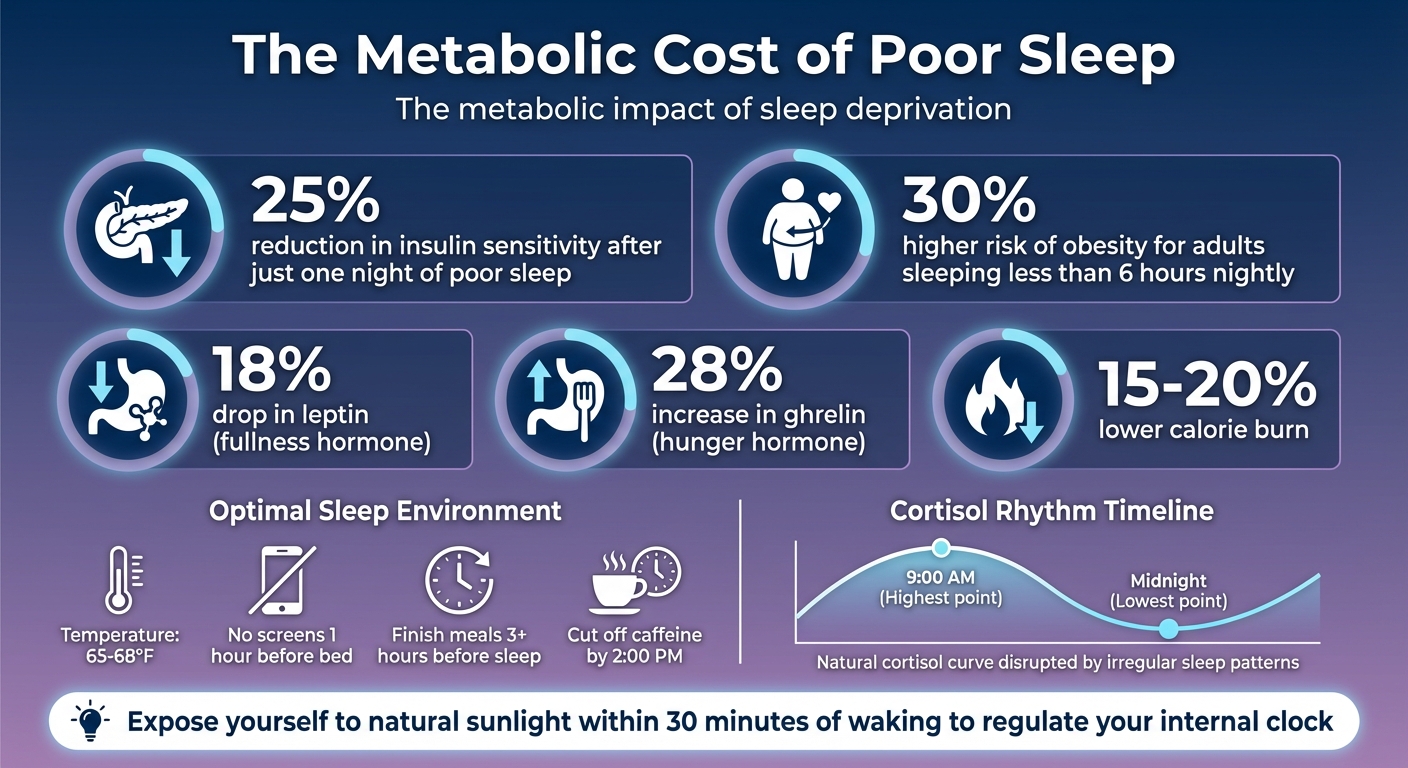
Sleep plays a crucial role in resetting your metabolism and balancing hormones. When you don’t get enough, your body reacts as if it’s under stress, leading to immediate disruptions. For instance, just one night of poor sleep can reduce insulin sensitivity by 25%, encouraging fat storage. Adults who sleep less than six hours a night regularly are at a 30% higher risk of obesity.
Sleep deprivation also throws off your hormones. It can drop leptin (the hormone that signals fullness) by 18%, increase ghrelin (the hunger hormone) by 28%, and lower calorie burn by 15–20%. Carmen Lombardo, NP and Sleep Medicine Specialist at Banner Health, explains this dynamic:
"A lack of sleep can cause the body to react as if it’s in distress… your body stays in high alert mode and produces more cortisol."
To maintain metabolic health, create a sleep-friendly environment. Keep your bedroom cool – between 65–68°F – avoid screens for an hour before bed, finish meals at least three hours before sleeping, and cut off caffeine by 2:00 PM.
One of the most effective strategies? Stick to the same sleep and wake times every day, including weekends. Your circadian rhythm thrives on consistency. Irregular sleep patterns can disrupt your natural cortisol curve, which peaks around 9:00 AM and dips to its lowest point around midnight. Additionally, expose yourself to natural sunlight within 30 minutes of waking to help regulate your internal clock and improve your sleep quality.
Good sleep habits aren’t just about rest – they’re essential for managing stress, keeping cortisol levels steady, and supporting overall metabolic health.
2. Exercise Regularly
Building on the importance of quality sleep, regular physical activity plays a critical role in managing stress and maintaining metabolic health.
Aerobic exercise does more than just burn calories – it helps reduce stress hormones like cortisol and encourages the release of endorphins, those "feel-good" chemicals that boost your mood and energy levels. On the metabolic side, exercise enhances insulin sensitivity, which helps counteract the harmful effects of prolonged stress and elevated cortisol. Dr. Anne Friedlander, an Exercise Physiologist at Stanford Lifestyle Medicine, highlights this balance:
"The benefits of exercise on disease risk are multifaceted, but one contributor can be a reduction in chronic elevated levels of cortisol. Regular movement provides the opportunity for the cortisol to run its natural course – to rise, lower, and then come into balance."
This natural rhythm underscores the importance of weaving structured physical activity into your daily routine.
Aim for 30–60 minutes of moderate activity each day to manage cortisol levels without overdoing it. Walking more than 7,500 steps daily has been linked to better stress regulation. For an added benefit, a 10-minute walk after meals can help lower blood sugar levels, reducing the need for cortisol to step in and manage glucose fluctuations.
Incorporate strength training to stabilize blood sugar and preserve muscle mass, while rhythmic exercises like swimming or cycling can activate a relaxation response that disrupts your body’s stress cycle. Practices such as yoga and tai chi are also excellent for engaging the parasympathetic nervous system, promoting calm and balance. However, be cautious with excessive high-intensity interval training (HIIT) without adequate recovery, as it may spike cortisol levels.
A single workout can improve insulin sensitivity for up to 48 hours, and maintaining a consistent exercise routine can significantly lower stress hormones like cortisol and adrenaline over time. The key is staying consistent.
3. Use Deep Breathing Techniques
Deep breathing is a simple yet effective way to manage stress by directly influencing your nervous system. It works by stimulating the vagus nerve, which activates the parasympathetic system – your body’s "rest-and-digest" mode. When you take slow, controlled breaths, you help shift away from the "fight-or-flight" response. Prolonged exhales, in particular, can slow your heart rate and reduce blood pressure.
Beyond offering immediate calm, deep breathing has lasting benefits. A 2017 study revealed that practicing diaphragmatic breathing for 20 sessions significantly decreased cortisol levels in healthy adults. Since high cortisol levels can disrupt metabolism, lowering them may improve insulin sensitivity and glucose regulation. Breathing at an optimal pace of 4–6 breaths per minute has also been shown to increase heart rate variability by 15–25% while reducing cortisol.
To incorporate diaphragmatic breathing into your routine, try this: inhale through your nose for 4 seconds, letting your belly expand, then exhale slowly through your mouth for 6–8 seconds. Repeat for 5 minutes, twice daily. For acute stress or pre-sleep anxiety, the 4-7-8 method works wonders: inhale for 4 seconds, hold your breath for 7 seconds, and exhale for 8 seconds. Repeat this cycle four times. Another option is box breathing, which involves inhaling, holding, exhaling, and holding again for 4 seconds each. This technique is particularly helpful for staying calm and focused.
Jenni Grover, MS, RD, LDN from Whole Health Partners, highlights the value of conscious breathing:
"By engaging in conscious breathing techniques, we can effectively manage stress levels and minimize stress’s negative impact on our bodies".
One of the best things about breathwork? You can practice it anytime, anywhere – no special tools required.
4. Eat a Balanced, Nutrient-Dense Diet
What you eat has a direct effect on how your body handles stress. Sugary and processed foods can cause your blood sugar to spike and then crash, which triggers the release of cortisol as your body scrambles to restore balance. Registered Dietitian Michelle Shapiro explains it well:
"When our blood sugar dips, cortisol is released. Cortisol helps to signal to the body that sugar is needed and directs the body to increase blood sugar… leading to a vicious stress/ blood sugar cycle."
To break this cycle, focus on foods that stabilize blood sugar and support your nervous system. Complex carbohydrates like oatmeal and whole-grain bread digest more slowly, helping to avoid those dramatic glucose swings that can lead to cortisol spikes. Pair these with 25–30 grams of protein at each meal – think Greek yogurt, eggs, or chicken – to replenish serotonin and dopamine levels. Don’t forget healthy fats! Omega-3 fatty acids from salmon, walnuts, and flaxseeds can help reduce inflammation and make your body less reactive to stress.
Certain nutrients are especially helpful when it comes to stress regulation. Magnesium, found in foods like spinach, almonds, and pumpkin seeds, helps regulate the HPA axis (your body’s stress control center). Low magnesium levels are tied to increased cortisol and higher stress sensitivity. Vitamin C, abundant in oranges and other citrus fruits, can curb cortisol levels, while fermented foods like kimchi and sauerkraut support gut health, which plays a role in emotional balance.
The timing of your meals is just as important as what’s on your plate. Skipping meals or drastically cutting calories can cause your blood sugar to plummet, prompting your body to release cortisol to compensate. Eating balanced meals every 3–4 hours keeps your blood sugar steady and prevents stress signals from kicking in.
Here’s how simple swaps can make a difference:
| Instead of… | Swap for… | Benefit |
|---|---|---|
| Sugary breakfast cereal | Oatmeal with nuts and berries | Offers more fiber and protein for steady energy |
| White bread | Whole-grain or sourdough | Slows down glucose absorption |
| Soda | Sparkling water with citrus | Avoids sugar-triggered cortisol spikes |
| Potato chips | Roasted nuts or seeds | Adds magnesium and healthy fats |
Incorporating these dietary changes can work hand-in-hand with other stress management practices to help you feel more balanced and resilient.
5. Build Social Connections and Practice Mindfulness
Enhance your sleep, exercise, breathing, and dietary habits by adding meaningful social connections and mindfulness practices to your routine. Together, these can help lower cortisol levels and promote overall well-being.
Spending time with others is a powerful way to reduce stress. According to research from the Mayo Clinic and Harvard T.H. Chan School of Public Health, social interactions – whether it’s a simple hug or a heartfelt conversation – help distract you from stress, provide emotional support, and remind you that you’re not alone. This sense of connection doesn’t just feel good; it comes with physical perks too. Lower cortisol levels can lead to reduced belly fat storage and improved insulin sensitivity.
Simple acts like grabbing coffee with a friend, sending a thoughtful message to a loved one, or volunteering with a local group can make a big difference. Joining community groups or faith-based organizations can also provide consistent opportunities for connection and support.
Pairing these social interactions with mindfulness practices can amplify their stress-reducing effects. A meta-analysis of 45 studies found that meditation significantly lowers stress markers like cortisol, blood pressure, heart rate, and inflammation. In one clinical trial, participants who followed a 31-day online mindfulness meditation program saw noticeable reductions in stress-eating and food cravings. Starting small can be effective – spend 10 to 20 minutes daily on guided meditation or keep a gratitude journal to shift your focus away from stress and toward positivity.
Mindfulness helps you stay present, which can ease stress and support metabolic health. Whether it’s through meditation, yoga, or mindful eating (taking the time to enjoy and savor your meals), these practices activate your body’s relaxation response and promote better balance in your metabolism.
Combining social connections with mindfulness lays a strong foundation for stress reduction, and personalized coaching can take these efforts to the next level.
How Personalized Coaching Supports Stress Management
Building healthy habits is one thing, but sticking to them when life gets chaotic? That’s the real challenge. This is where personalized coaching steps in. Instead of offering a one-size-fits-all approach, a coach adapts your nutrition and exercise plans to fit your unique situation. This helps you sidestep the common all-or-nothing mindset that stress can often trigger.
Take N The Mix Nutrition‘s bundle package as an example. For $179/month, it provides a combination of custom macro-based nutrition plans, tailored workout programs, and 1:1 coaching. This approach doesn’t just address surface-level stressors like work deadlines or family responsibilities. It also tackles hidden factors like under-eating, unstable blood sugar, and poor recovery – issues that can spike cortisol levels and hinder your progress.
One major benefit of 1:1 coaching is the accountability and support it offers. Krista Scott-Dixon, PhD from Precision Nutrition, explains:
"As a coach, you have an opportunity to introduce some calm, cool, collected energy into your stressed-out clients’ lives."
The numbers back this up: clients who work with coaches incorporating sleep, stress, and recovery strategies are 30% more likely to stick with their programs compared to those who don’t.
Katie Stone from Earthbar highlights the importance of consistency, stating:
"metabolic health thrives under conditions of consistency and support – not pressure".
Personalized coaching also simplifies decision-making during stressful times. By focusing on just 2–3 key habits – such as hitting protein goals or maintaining a consistent bedtime – you can naturally stabilize your energy, blood sugar, and hormones. Instead of chasing perfection, this approach gives your body the balance it needs to self-regulate. Over time, this creates the foundation for lasting metabolic health and true stress resilience.
Conclusion
Managing stress requires creating daily habits that help counterbalance the pressures of life. The five strategies we’ve covered – getting quality sleep, staying active, practicing deep breathing, choosing nutrient-rich foods, and maintaining social connections – work together to help your body move out of "survival mode" and support a healthier metabolic state.
What matters most is consistency, not perfection. As the CDC reminds us, “Managing stress daily can prevent you from developing long-term stress”. By prioritizing regular sleep, movement, and balanced meals, you can help regulate cortisol levels and stabilize blood sugar.
Remember, your body is simply responding to prolonged stress as it was designed to do. Chronic stress drives up cortisol, which can lead to increased glucose levels and belly fat – both contributors to insulin resistance and type 2 diabetes. Consistent, small efforts can disrupt this pattern and promote long-term metabolic health.
If tackling stress management on your own feels like too much, there’s no shame in seeking additional support. Personalized coaching, like the services offered by N The Mix Nutrition (https://nthemixnutrition.com), can help you focus on just a few key habits and stay on track.
Pick one or two strategies to get started today. Your body – and your metabolism – will thank you.
FAQs
How can I tell if stress is hurting my metabolism?
Stress can take a toll on your metabolism, showing up in ways like unexpected weight gain, difficulty shedding pounds, or fluctuating blood sugar levels. When stress becomes chronic, it sets off a chain of physiological changes that can interfere with how your body processes energy. These disruptions can make it harder for your body to operate as it should. If you’re noticing these signs, it might be time to explore stress management techniques to support a healthier metabolism.
What’s the best first habit to start if I’m overwhelmed?
When you’re feeling overwhelmed, one of the simplest yet most effective habits to start with is deep breathing. It’s easy to do, doesn’t require any special tools, and can be practiced anywhere – whether you’re at your desk, in your car, or lying in bed.
Deep breathing works by calming your nervous system, helping to steady both your body and mind. This makes it a powerful first step toward managing stress and improving your overall sense of balance.
When should I get coaching help for stress and metabolic health?
If handling stress alone feels too challenging or you’re facing persistent struggles with your well-being, it might be a good idea to consider coaching support. A personalized coach can provide you with strategies designed specifically for your needs, along with accountability and expert guidance to help you manage stress more effectively and boost your metabolic health. N The Mix Nutrition offers services such as customized nutrition plans and fitness training to help you build lasting habits and work toward metabolic repair.